From file to bulk: how a printed fabric order is approved
A printed fabric order moves through a series of approvals between the first file and the finished rolls. Knowing them in advance keeps the order on time and the result as expected.
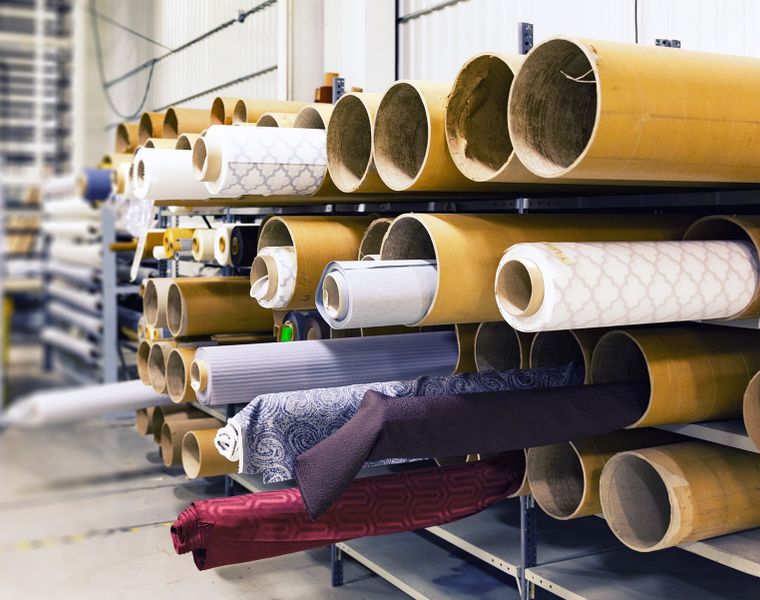
Printed fabric orders rarely go wrong in production. They go wrong earlier, when something was assumed rather than agreed: the fabric, the colour, the repeat, the tolerance. A clear sequence of samples and approvals turns those assumptions into decisions. The steps below are the usual path from a design file to bulk rolls.
1. Enquiry and brief
The order starts with a brief. The useful facts are the end product, the fabric or fabric code if known, the printing method if there is a preference, the number of designs and colourways, the quantity of each, the finished width needed and any test requirements such as wash or light fastness. With that, the supplier can suggest a base and a printing route, and give a realistic price and lead time.
2. Choosing the base cloth
The base fabric is fixed before any printing, because the same file looks different on each quality. Buyers usually choose from swatch cards: every one of our fabrics has a code and a kartela, and samples are requested by code. If none of the stock qualities is right, the weight, weave, construction, content or finish can be developed to order, which adds a sampling stage of its own.
3. File check
The artwork is checked before printing: resolution at print size, colour mode, repeat type and seams, repeat size against the printing width and, for placement prints, the position of each panel. For rotary printing the design is also separated into colours. Problems found here cost a few emails; found later, they cost a strike-off.
4. Strike-off
A strike-off is a length of the design printed on the chosen production cloth and fixed, washed and finished as bulk will be. It should include at least one full repeat, and often all colourways side by side. The buyer checks it for:
- colour against the physical standard, under the agreed light source;
- scale and repeat, including seams;
- sharpness of detail on that particular weave;
- hand and appearance after finishing.
Corrections are marked on the strike-off and a second one is printed if needed. For a design moving from digital to rotary, a rotary strike-off is made and approved against the digital original.
5. Approval and reference
Approval should be written and attached to a physical cutting of the approved strike-off, signed or labelled with the design, colourway and date. One cutting stays with the buyer and one with the mill. That cutting, not a photograph or a screen, is the standard for bulk and for every reorder. If lot-to-lot variation matters, agree a tolerance or a shade band at this point.
6. Bulk production
The fabric is prepared, printed with the approved file and recipe, then fixed and finished. Depending on the method, that means steaming and washing for reactive, or curing for pigment. Many buyers ask to see a pre-production or first-lot cutting before the full quantity is finished, especially for a large order.
7. Inspection and testing
Finished rolls are inspected for print faults, shade against the approved cutting, width and length, and graded against the agreed standard. If the order has test requirements, samples from the bulk go to the laboratory. Test the bulk, not the strike-off, because it is the bulk that will be sold.
8. Delivery and reorders
Rolls are measured, labelled and packed. For reorders, the approved cutting and file version are the reference, and a quick check against them is usually enough to go straight to bulk.
Keeping it on time
Most delays come from missing information at the start or slow decisions at the strike-off stage. A complete brief, a physical colour standard and a named person who approves samples keep the order moving. See our printing options and fabric range, or send us your brief to begin.