How to read a fabric swatch card
A swatch card packs a fabric's specification into a few lines. Here is what each line means and how to read the tolerances.
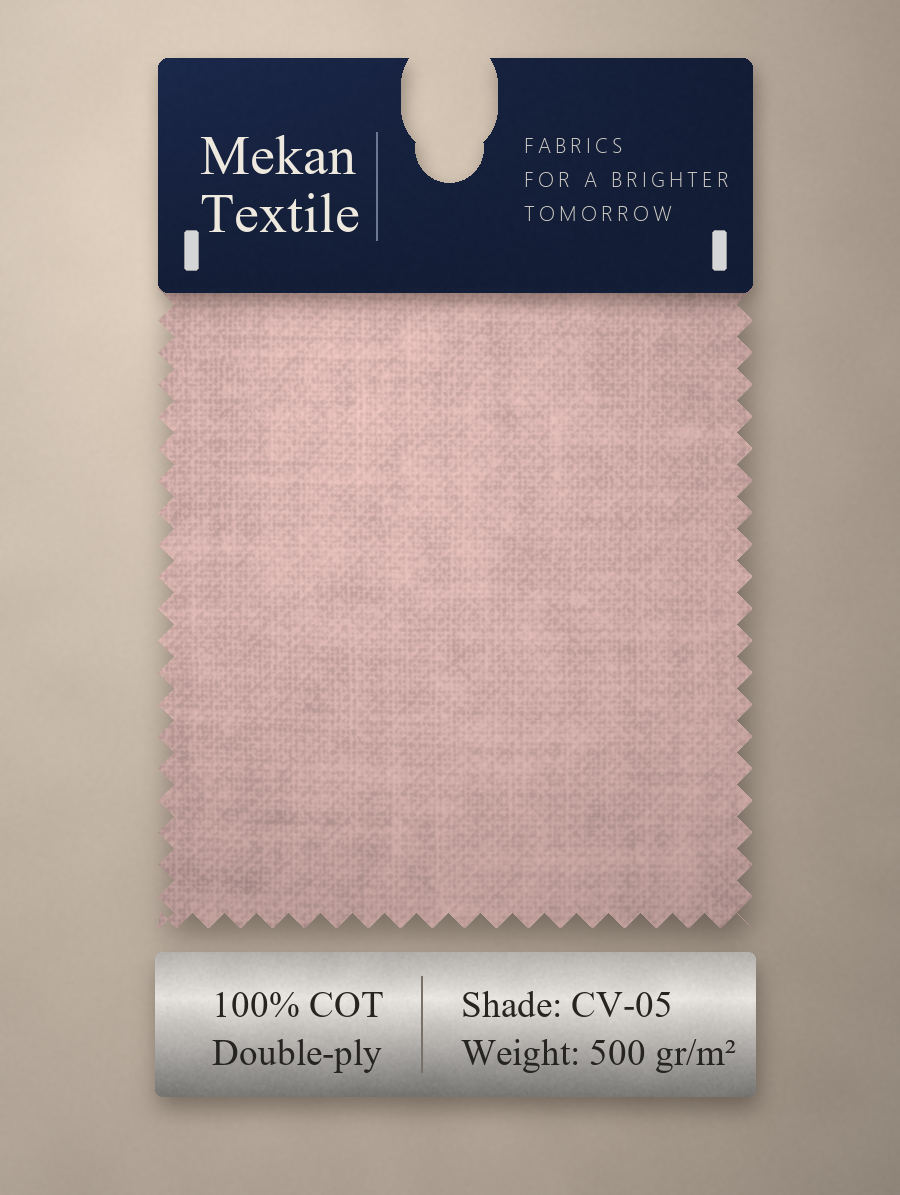
A swatch card, often called a kartela in Türkiye, is a small piece of fabric mounted on a card with its key data printed beneath it. It is the quickest way to judge a cloth by hand and the reference both sides use when a buyer orders. The printed lines are short, so it helps to know exactly what each one says and what it leaves out.
The code
Every quality has a code, for example PM-01 or PL-02. The letters usually identify the family or construction and the number identifies the individual quality. The code is the single most important line on the card: it tells the mill exactly which construction, yarn and finish you mean. When a card also shows a shade or colour reference, quote both, because the same quality may exist in several colours.
Composition
Composition gives the fibres by percentage of weight, such as 100% cotton, 50% cotton 50% linen, or 97% cotton 3% elastane. Abbreviations are common: CO or COT for cotton, LI for linen, EL or EA for elastane, CLY for lyocell. Composition tells you how the cloth will behave in washing and wear, but not how it is woven. Two fabrics with the same composition can feel completely different.
Width
Width is usually the usable width in centimetres, measured across the fabric without the selvedges, although some cards give the full width. A figure such as 150 cm ± 5 means the width can fall anywhere from 145 to 155 cm between lots. Plan your cutting layout on the lower figure: a marker made for 150 cm will not fit on a roll that arrives at 146 cm.
Weight
Weight is given in grams per square metre, written gsm, g/m² or gr/m². It is measured on a conditioned sample, typically following ISO 3801. Sometimes the weight is a single figure, such as 500 gr/m², and sometimes a range, such as 95-115 g/m². A range often appears when one quality is supplied in several colours or finishes, since dyeing and finishing change the weight slightly, or when a fabric has areas of different density, as in some checks and dobbies.
Reading the tolerance
The "± 5" after a figure is the tolerance: how far the delivered fabric may deviate from the stated value. The key question is the unit. On width it is usually centimetres. On a card that reads "Weight: 85 g/m² ± 5", the tolerance is in the same unit as the figure, so the cloth may weigh 80 to 90 g/m². Some mills give weight tolerance as a percentage instead, written with a percent sign: 200 g/m² ± 5% means 190 to 210 g/m². When a range and a tolerance appear together, as in 95-115 g/m² ± 5, the tolerance applies around the range, which widens the possible spread further. If a card does not make the unit clear, ask before you order.
| Printed on the card | Usual reading | What can arrive |
|---|---|---|
| 150 cm ± 5 | Width, ± 5 cm | 145 to 155 cm |
| 200 g/m² ± 5% | Weight, ± 5 percent | 190 to 210 g/m² |
| 85 g/m² ± 5 | Weight, ± 5 g/m² | 80 to 90 g/m² |
| 95-115 g/m² ± 5 | Weight range with a tolerance | 90 to 120 g/m² |
If the unit is not stated, ask. It is a one-line email that can save a disagreement later.
What a swatch card does not tell you
- Shrinkage: dimensional change after washing is tested separately, often to ISO 6330 and ISO 5077.
- Colour fastness: washing, rubbing and light fastness results come from test reports.
- Colour accuracy: a small swatch under shop lighting is a guide, not a colour standard. Approve colour against a larger sample in agreed light.
- Drape and behaviour in a garment: for that you need a longer sample or a made-up piece.
When you have chosen a fabric from a card, quote the code, the colour or shade and the weight exactly as printed. That combination identifies the cloth without doubt. Our shirting and trouser collections show every swatch card online, and our canvas is carded by shade. Send us the codes you are interested in and we will confirm the specification and tolerances for each.