Care labels for printed cotton home textiles
A care label is a promise about how a product will survive washing. For printed cotton, it should be based on tests, not habit.
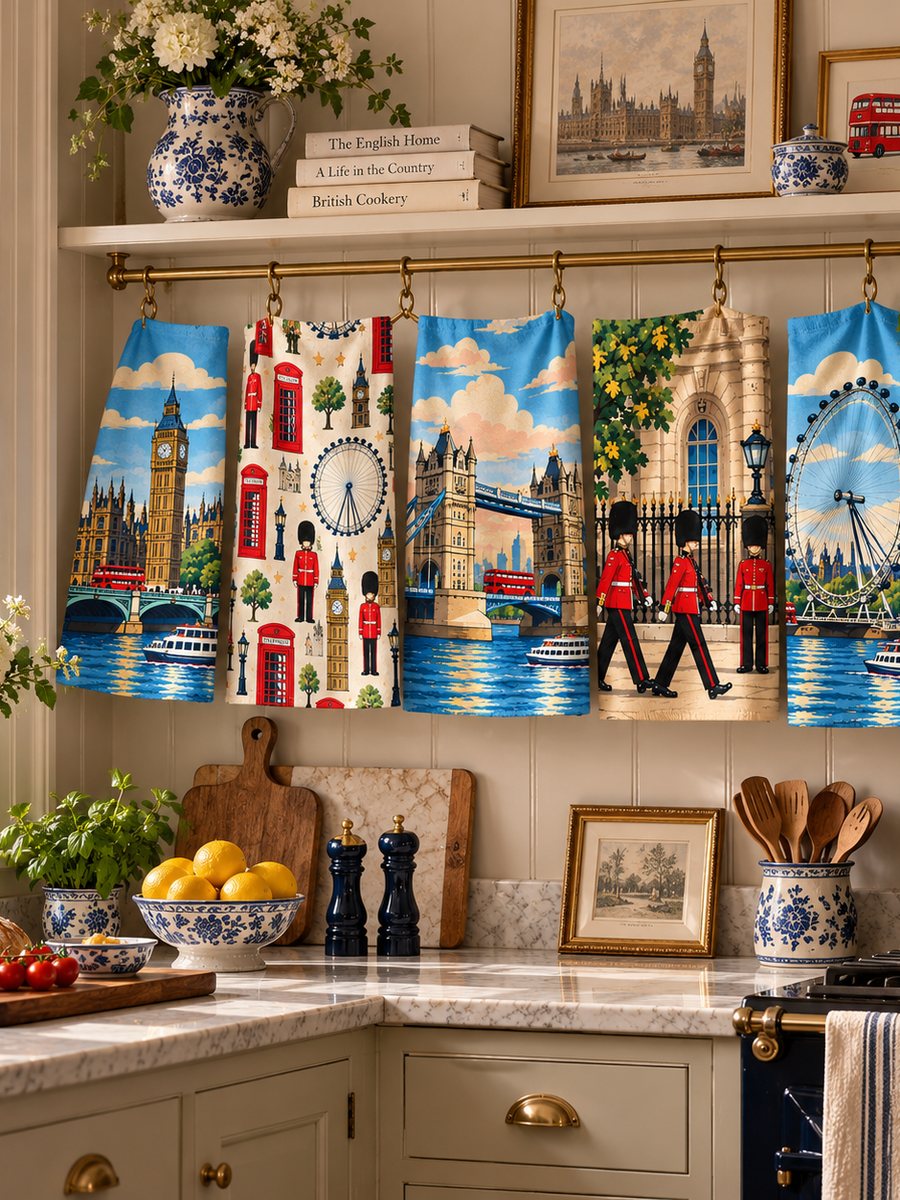
The care label is the small piece of text that decides how your customer will treat your product for its whole life. On printed cotton home textiles, such as tea towels, napkins, tablecloths, cushion covers and curtains, a well-chosen label protects the print and the size of the product. A careless one leads to faded colours, shrunken pieces and returns.
What the label must and should say
Requirements differ by market. In the European Union, fibre composition labelling is required under Regulation (EU) No 1007/2011, while care labelling is voluntary but widely expected. In the United States, the Care Labeling Rule requires care instructions on most textile products. Most brands use the care symbols defined in ISO 3758, which are recognised across markets and save translation. A complete label for a home textile usually covers:
- Fibre composition, for example 100% cotton.
- Washing: maximum temperature and whether a gentle cycle is needed.
- Bleaching: allowed, oxygen only, or not allowed.
- Drying: tumble drying and its heat level, or line or flat drying.
- Ironing: the maximum iron temperature.
- Professional cleaning, where relevant.
The label should state the most severe treatment the product can take without damage, not the gentlest possible. Over-cautious labels make products hard to live with; over-generous ones lead to complaints.
Wash temperature
Cotton itself tolerates hot washing, but the print, the colour and the size may not. The choice depends on the colour route:
| Colour route | What to check | Typical label |
|---|---|---|
| Reactive print or dye | Wash fastness at the intended temperature | 40 or 60 °C, depending on shade and test result |
| Pigment print | Wash and rubbing fastness, binder durability | Usually 40 °C |
| White or pale solid | Shrinkage, whiteness | Often 60 °C |
Wash fastness is tested to ISO 105-C06, which specifies test conditions at several temperatures. Test at the temperature you intend to put on the label, not a lower one. Kitchen textiles such as tea towels are often washed hot, so if a design can take 60 °C, it is a real selling point.
Bleach
Chlorine bleach will strip most printed and dyed colours. For printed cotton, the usual symbol is "only oxygen or non-chlorine bleach" or "do not bleach". Many household detergents contain oxygen bleaching agents, so a strong print should be tested with a detergent that contains them.
Drying and ironing
- Tumble drying increases shrinkage. If you allow it, base your cutting allowances on a tumble-dried shrinkage test to ISO 6330 and ISO 5077.
- Line drying in strong sun can fade colours over time; this is more a user note than a symbol.
- Ironing: cotton takes a hot iron. Pigment prints are best ironed on the reverse, and a medium setting is a safe default for heavy pigment coverage.
Curtains and large pieces
Curtains are washed less often but are larger and harder to handle. Lined curtains may need professional cleaning, because face fabric and lining can shrink by different amounts. If you sell unlined cotton curtains as washable, test the actual lot for shrinkage and label accordingly.
Test first, then label
The safest route is to send finished samples through the tests that match the label you want, then write the label from the results. We print tea towels, table linen and curtains by reactive and pigment routes and can advise on the care label that fits each one. Contact us with your product and the care you want to promise.