Swatch books and header cards: presenting fabrics to buyers
The way a fabric is presented decides how quickly a buyer can judge it. Each sample format answers a different question, from colour to drape.
Before a buyer orders a metre, they judge a fabric through a sample. The format of that sample shapes the decision: a small card shows the surface and the data, a larger header shows the handle and drape, and a book lets a whole range be compared on one table. Mills and converters use several formats side by side, each suited to a stage of the buying process.
The main formats
| Format | What it is | Best for |
|---|---|---|
| Swatch card (kartela) | A small piece mounted on a card with its data | Reference, ordering by code, filing |
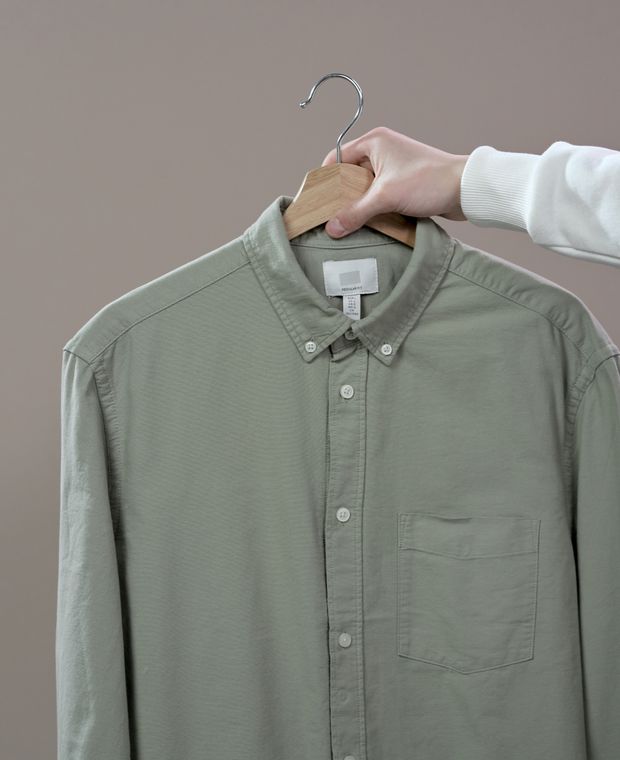
| Header card | A larger piece, often folded over a card header | Handle, drape, print or stripe repeat |
| Swatch book or bunch | Many swatches bound or clipped together | Comparing a range or a family |
| Colour card | One quality in all its stock colours | Choosing a shade quickly |
| Hanger | A length hung from a bar or hook | Drape of curtain and apparel fabrics |
| Sample length | A metre or more from a real roll | Making up a prototype |
What each piece should say
A sample is only useful if it can be reordered exactly. The minimum information is the fabric code, the composition, the weight in gsm, the usable width and the colour or design reference. Useful additions are the weave or construction, the finish, the recommended care and, where tests have been done, the method and result, for example a wash fastness grade to ISO 105-C06. Keep the layout identical across a range, so buyers learn where to look.
The code is the key line. Every one of our fabrics has a code, such as PM-01 or PL-02, and a swatch card, and samples are requested by that code. A buyer who files cards by code can come back to a quality without describing it.
Cutting samples well
- Mark the grain. Cut square to the warp and, where it is not obvious, show the warp direction with an arrow.
- Show the face. Mount the face side up, and label it if the back could be mistaken for it.
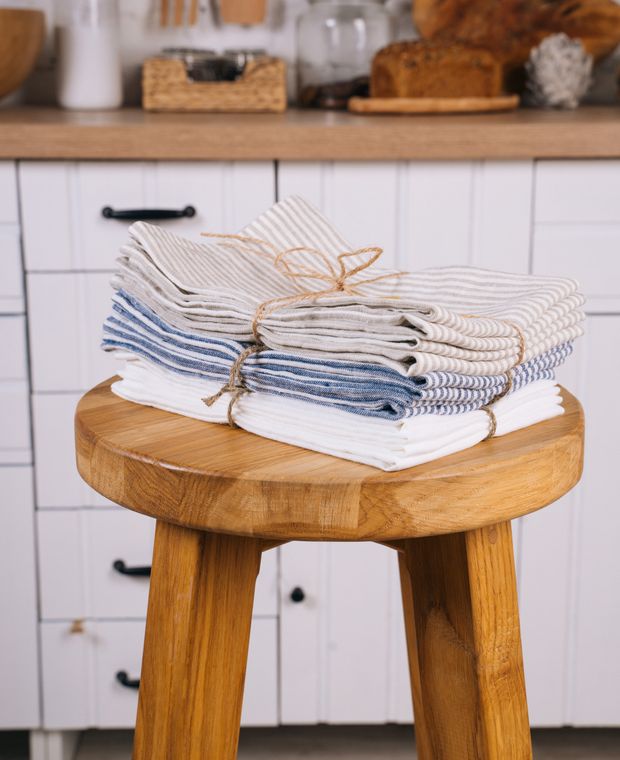
- Show the full repeat. For stripes, checks and prints, a header or hanger should include at least one complete repeat; a small card may show only part of a design.
- Finish the edges. Pinking shears or a clean cut stop fraying, especially on open weaves such as muslin and panama.
- Cut from bulk-representative cloth. A sample from a lot that has been finished like the bulk shows the true hand and shade.
Colour cards for stock ranges
For a fabric kept in many stock colours, a colour card is the fastest tool. Our 500 gsm cotton canvas is kept in 30 stock colours, and seeing all of them in one strip lets a designer pick a shade and move straight to a sample. Colour cards should be cut from the same quality they represent, because the same shade looks different on another weave.
Books for apparel ranges
Apparel buyers usually compare families: several shirtings of different weight and fibre, or trouser fabrics with and without stretch. A book arranged by family and then by weight makes that comparison easy. Our shirting fabrics fall into five fibre families and our trouser fabrics into six, which is the natural order for a book.
Keeping samples current
Samples outlive the ranges they represent. Remove discontinued qualities, replace faded or handled swatches, and keep a version mark on each book so that buyer and mill are looking at the same edition. When a quality changes in weight, width or finish, change its card at the same time.
If you are building a presentation for your own customers, tell us the codes you want to show and the format you need, and we will advise on sample sizes.