Trouser fabrics explained: cotton-lyocell and cotton-elastane
Most trouser fabrics are cotton with something added. Elastane adds stretch, lyocell adds drape, and weight decides the rest.
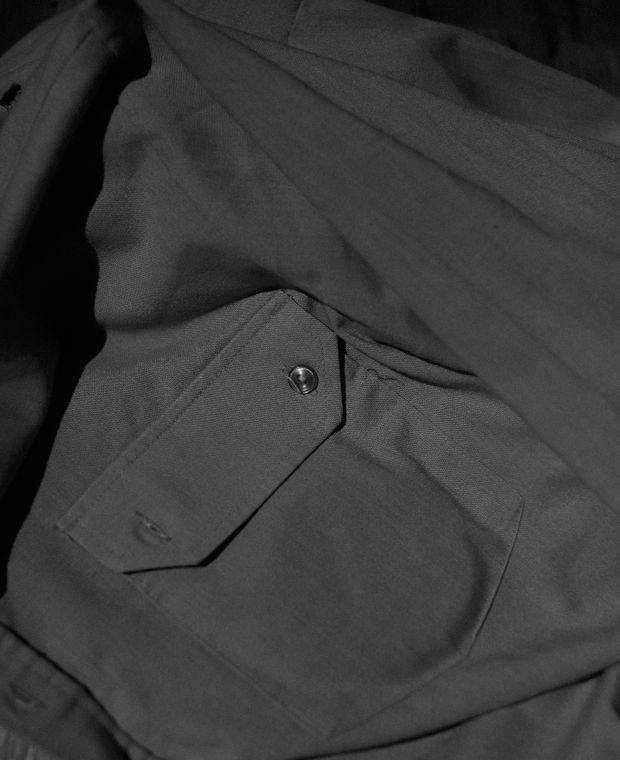
A trouser fabric has to do more than a shirting. It must hold its shape at the knee and seat, stand up to abrasion, press to a clean line and not show through. Most modern trouser cloths start with cotton and add a second or third fibre to change how the cloth moves. The two most common routes are cotton-elastane and cotton-lyocell, usually with elastane in the lyocell blend too.
Cotton-elastane: the classic stretch trouser
Cotton-elastane fabrics are mostly cotton, with 1-4% elastane for comfort stretch. They keep the dry, firm hand of cotton and the structured look of a chino or five-pocket trouser, with enough give to move comfortably. They are often woven as a drill or a sateen, which gives a dense, durable surface that takes piece-dyeing well.
In our collection, nine cotton-elastane qualities (PE-01 to PE-09) run from 219 to 280 gsm, with 1% to 4% elastane.
Cotton-lyocell: softer drape
Adding lyocell to cotton makes the cloth smoother and heavier in the hand, and helps it fall rather than stand away from the leg. Cotton-lyocell trousers look slightly more refined than an all-cotton chino and feel cooler to touch. The higher the lyocell share, the more fluid the drape.
Our cotton-lyocell qualities (PL-01 to PL-05) all carry 2-4% elastane, and the lyocell share runs from 26% to 50%. PL-01 and PL-02, at 180-185 and 190-195 gsm, are equal parts lyocell and cotton for a light, fluid trouser. PL-05 is 70% cotton and 28% lyocell at 290 gsm, a substantial cloth for colder months.
Side by side
| Cotton-elastane | Cotton-lyocell | |
|---|---|---|
| Hand-feel | Dry, firm, familiar cotton | Smoother, cooler, softer |
| Drape | Structured, holds a shape | Fluid, hangs close to the leg |
| Look | Casual to smart casual | Smart casual to tailored |
| Our weight range | 219-280 gsm | 180-290 gsm |
| Watch for | Growth at knee and seat in higher stretch | Surface abrasion and fibrillation on dark shades |
What weight tells you
Across the whole range from about 170 to 290 gsm (roughly 5 to 8.5 oz/yd²), weight tracks the season and the formality of the trouser. The lightest cloths, around 170-200 gsm, suit summer trousers and relaxed cuts. The middle, 200-250 gsm, is the all-year weight for chinos and smart casual trousers. Above 250 gsm, the cloth gives a structured, warmer trouser that holds a crease and resists wind.
Weight and blend interact. A 250 gsm cotton-lyocell feels softer and drapes more than a 250 gsm cotton-elastane, so compare samples in the hand rather than by the number alone. Both families can be piece-dyed to a wide range of colours, and the lyocell blends in particular give clear, slightly lustrous shades.
Beyond the two main families
Our trouser collection also includes a modal-lyocell (ML-01, 220-225 gsm), a linen blend with lyocell (KT-01, 170-175 gsm), a wool with a little cotton and elastane (YN-01, 290 gsm), and a cotton-polyamide with 8% elastane (PP-01, 186 gsm) for a sportier, more technical trouser. Widths across the collection run from 145 to 160 cm.
Choosing
- For a durable, structured chino: cotton-elastane in the middle of the weight range.
- For a softer, more fluid trouser: cotton-lyocell, with a higher lyocell share for more drape.
- For summer: a lighter cotton-lyocell or the linen blend.
- For colder months: the heavier cotton-lyocell or the wool.
Every quality is shown with its swatch card and made-up trousers on our trouser fabric page. Quote the codes you want to compare and we will send samples.