How much elastane is enough in a woven fabric?
A few percent of elastane changes how a woven fabric moves. Here is how much a shirt needs, how much a trouser needs, and what to check.
Elastane, also known as spandex or by brand names such as Lycra, is a synthetic fibre that can stretch to several times its length and return. Woven fabrics have very little natural stretch, so even a small amount of elastane changes how the cloth moves, fits and recovers. The question is how much, and where it goes.
How stretch is built into a woven
In most stretch wovens, the elastane is used as a core inside a cotton yarn: the elastane filament is wrapped in cotton fibres so that only cotton shows on the surface. These core-spun yarns are usually put in the weft, giving stretch across the width. Stretch in both directions, called bi-stretch, uses elastane in warp and weft and is less common in shirting and trousers.
After weaving, the fabric is heat-set to stabilise the elastane at a chosen width. The percentage on the label is the share of elastane by weight, which is always small because elastane is fine and light compared with cotton.
Shirts: comfort without a stretch look
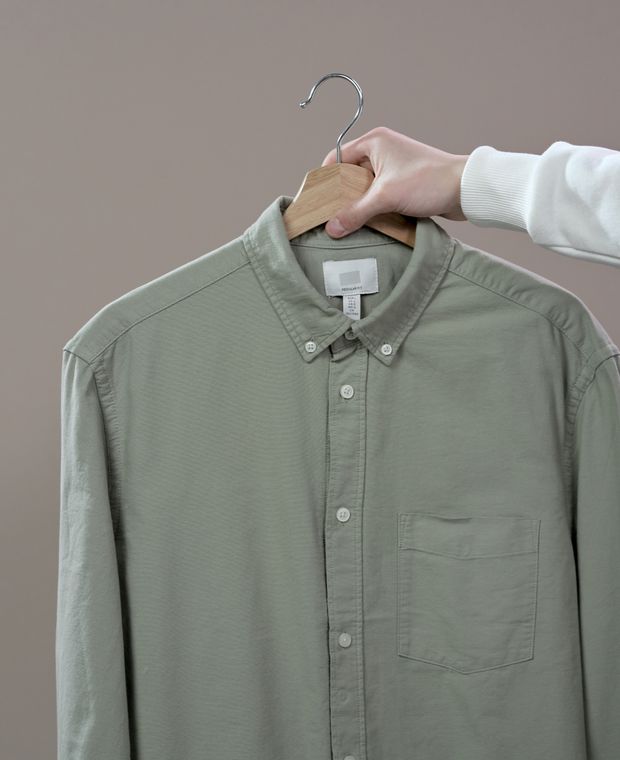
A shirt needs freedom at the shoulders and elbows but should not cling. Most stretch shirting sits between about 2% and 5% elastane. At the low end the effect is subtle: the shirt feels easier and creases a little less. Around 4-5%, the stretch is clearly noticeable and suits slimmer fits and shirts meant to be worn tucked in all day. Our shirting PE-01 is 95% cotton and 5% elastane at 109 gsm, and the cotton-linen PK-01 carries 4% elastane.
Trousers: recovery matters more than stretch
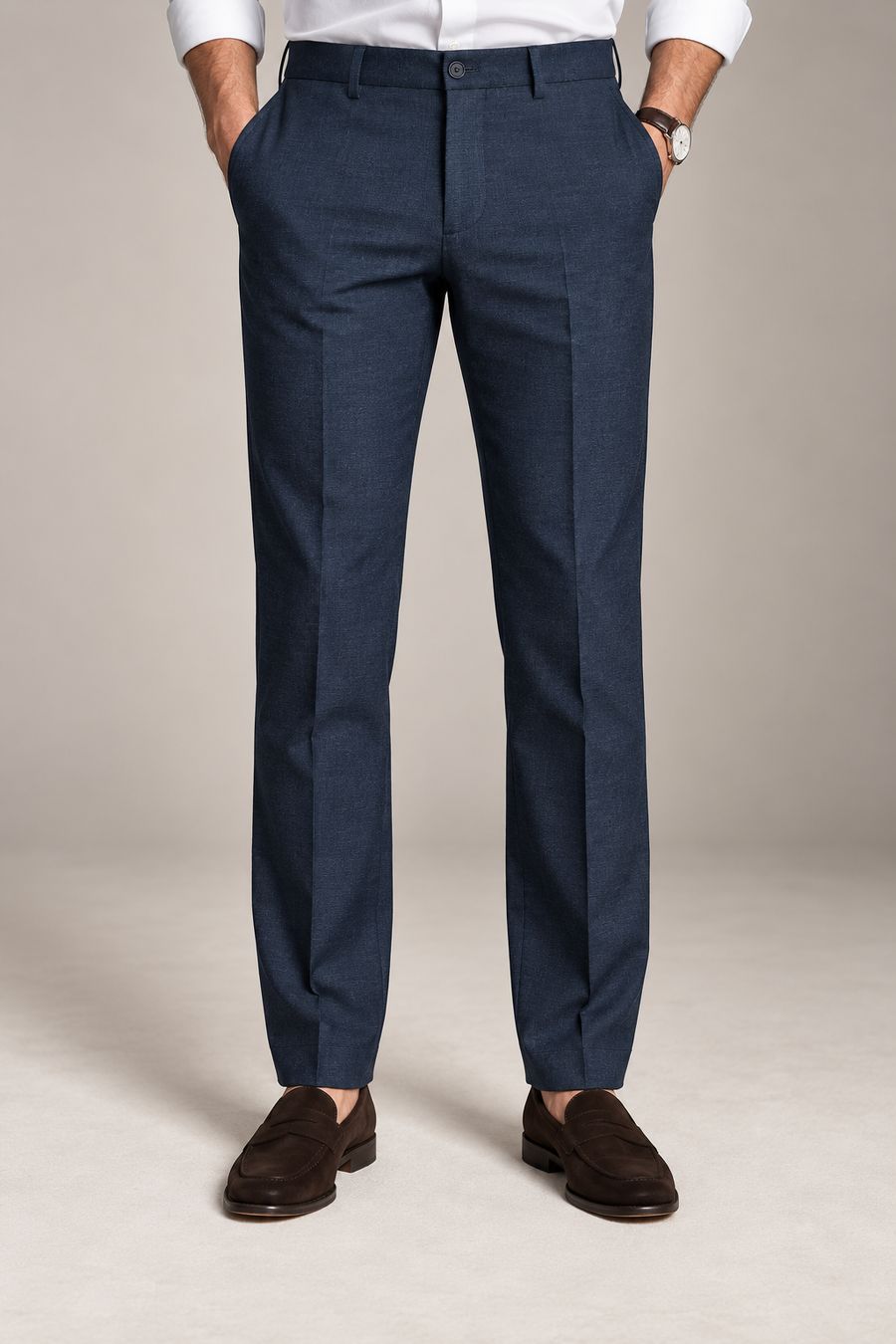
Trousers are stressed hard at the knee and seat. The aim is not only stretch but recovery, so that the cloth does not bag after a day of sitting. Classic chinos and tailored trousers often use 1-3% elastane. Slimmer fits and more active styles go to 3-4%, and some technical or very close-fitting cloths use more.
| Elastane | Effect in a woven | Typical use |
|---|---|---|
| 1-2% | Comfort stretch, the garment looks rigid | Regular-fit trousers, classic chinos |
| 3-4% | Clear stretch and good recovery | Slim trousers, stretch shirts |
| 5% | Noticeable stretch in a light cloth | Fitted shirting |
| 6-8% | High stretch, sporty hand | Performance and close-fitting trousers |
Our cotton-elastane trouser fabrics run from 1% to 4% elastane, the cotton-lyocell qualities carry 2-4%, and the cotton-polyamide PP-01 goes to 8%.
Growth, recovery and shrinkage
Three figures are worth asking for on any stretch woven:
- Stretch: how far the cloth extends under a set load.
- Growth: how much longer it stays after being held stretched. Low growth means less bagging.
- Dimensional change after washing: stretch fabrics can shrink more than rigid ones if they were not fully stabilised.
More elastane is not automatically better. Too much in a light shirting can make it feel synthetic and warm, and elastane is sensitive to high heat, chlorine and some finishing chemicals, so care labels should allow for it.
In the cutting room
Stretch fabric should be relaxed off the roll before it is cut, and the pattern should allow for the stretch: a slim trouser in 4% elastane can be cut with less ease than the same trouser in a rigid drill. Mark the stretch direction on the pattern so that the stretch runs around the body, not along it.
See the elastane content of each quality in our trouser and shirting collections, or describe the fit you are after and we will suggest the right stretch level.