How muslin is packed for kitchens: rolls and book-folded pieces
The same muslin can reach a kitchen as a small roll, a large roll or a flat folded piece. The right format depends on how the kitchen cuts and stores it.
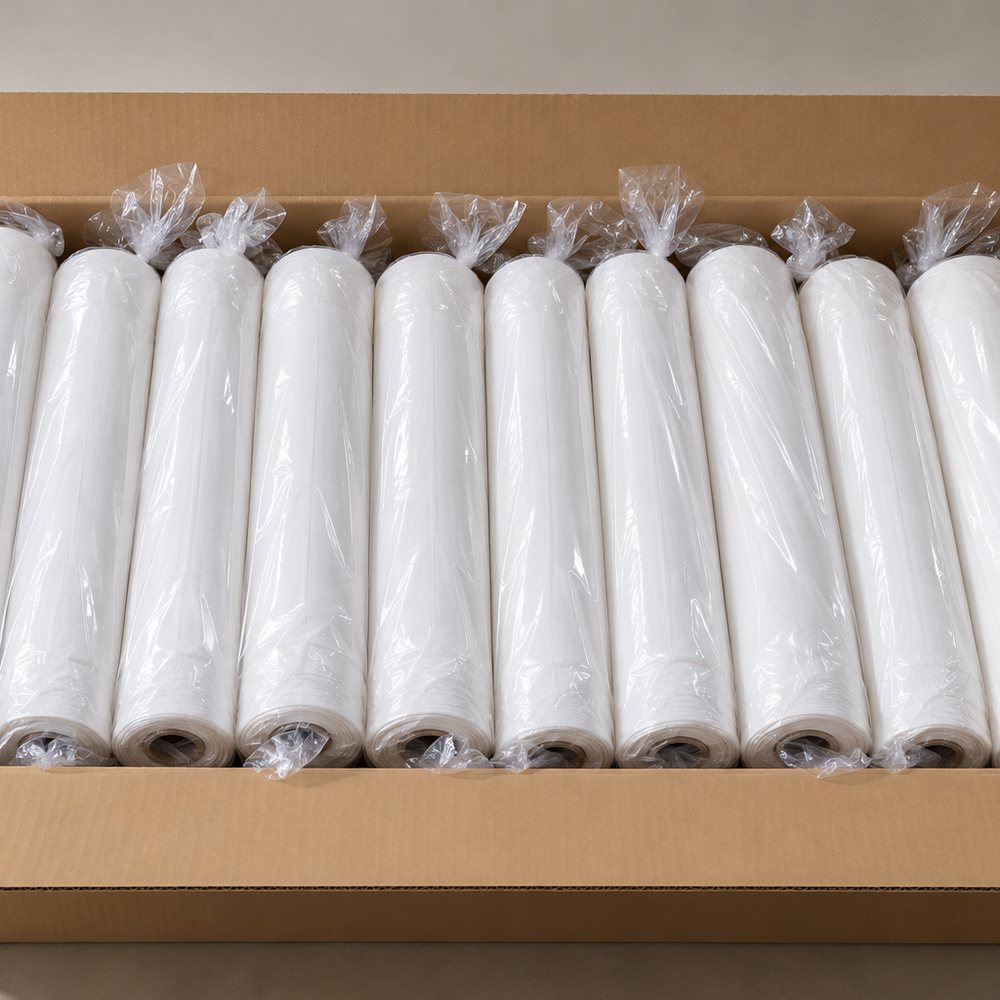
A professional kitchen uses muslin in short lengths, many times a day: a square to strain a stock, a strip to tie a bouquet garni, a sheet to cover a tray. How the cloth arrives affects how easily it can be cut, how clean it stays between uses and how much of it ends up wasted. For that reason, chef's muslin is usually supplied in a few standard formats rather than simply by the metre.
The three formats
| Format | What it is | Suits |
|---|---|---|
| 10 m roll | Muslin wound on a core, 10 metres long | Smaller kitchens, sections that use muslin occasionally, trial orders |
| 50 m roll | The same cloth wound on a core, 50 metres long | Busy kitchens, central production kitchens, hotels with several outlets |
| 50 m book-folded piece | 50 metres folded flat, back and forth, into a compact stack | Kitchens that pull and cut lengths from a shelf or drawer, and tight storage |
Rolls
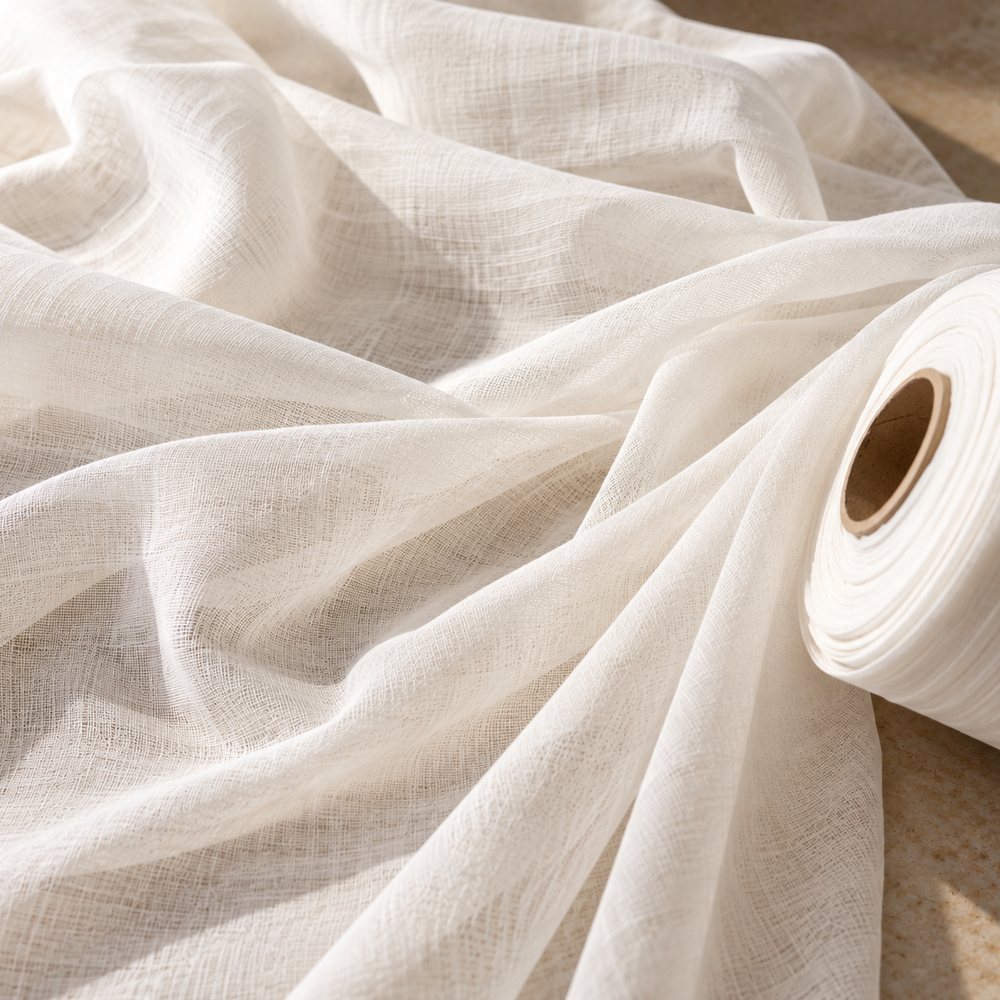
A roll is the most familiar format. The cloth unwinds evenly, can be measured off against a mark on the bench and cut straight across. Kept in its wrap on a dispenser bar or in a clean container, the unused cloth stays protected, and only the length being used is exposed.
The choice between 10 m and 50 m is mainly about consumption and storage. A 10 m roll is light, easy to place at a single station and quickly used up, so the cloth is always fresh. A 50 m roll costs less per metre in handling and packaging and suits kitchens that use muslin every day, but it needs a clean, dry place to live while it is in use.
Book-folded pieces
In a book fold, the cloth is folded back and forth on itself in equal lengths, like the pages of a book, so it lies flat. A 50 m book-folded piece takes up little room, stacks neatly on a shelf, and a length can be pulled from the top and cut without unrolling anything. Many chefs prefer it for cutting squares, because each fold gives a ready guide for the length. The fold lines relax quickly once the cloth is wet.
How the cloth is protected
Because chef's muslin goes into direct contact with food, packing is part of its hygiene. Each roll or piece should be wrapped individually, so that opening one does not expose the rest, and packed in closed cartons for transport and storage. The cloth should arrive clean, dry and free from odours, and should stay that way until it is used.
Storage in the kitchen
- Keep unopened rolls and pieces in their wrap and carton, in a dry store away from chemicals and strong smells. Cotton absorbs odours easily.
- Open one roll or piece at a time per station and use it before opening the next.
- Keep the open cloth covered between uses, and cut with clean scissors on a clean surface.
- Rotate stock so the oldest cartons are used first.
- Keep muslin for food separate from cleaning cloths at all times.
Choosing a format
If each section cuts its own muslin, small rolls at each station usually work best. If one person prepares cut pieces for the whole kitchen, a 50 m roll or a book-folded piece at a central prep bench is more efficient. Many kitchens keep both: a large format for preparation and a small roll at the pass.
Mekan Textile supplies its fine, open plain-weave chef's muslin as 10 m and 50 m rolls and as 50 m book-folded pieces, and every roll and piece is certified safe for direct contact with food. See the formats on our muslin and cheesecloth page, or tell us how your kitchen uses muslin and we will suggest the format and send a sample.