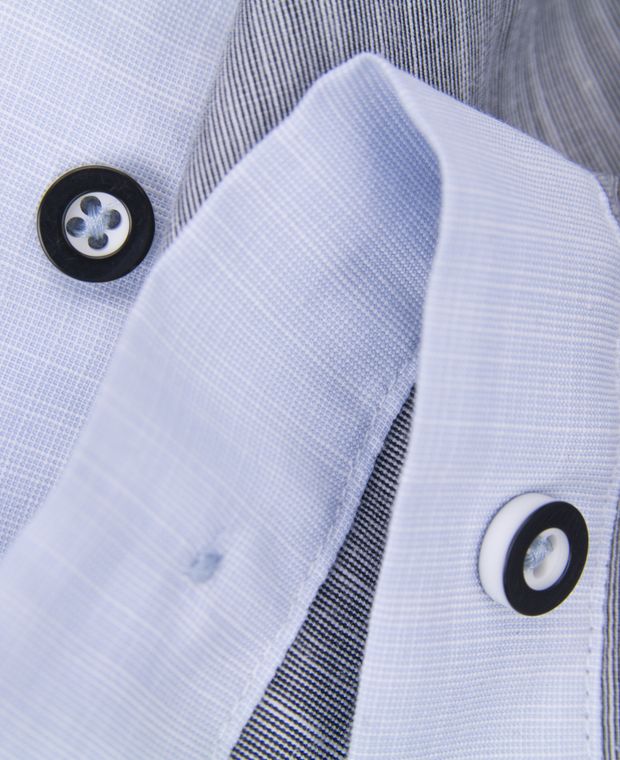
Shirting fabric weights from 85 to 165 gsm
Shirting runs from near-sheer voiles to substantial overshirt cloths. Here is how weight maps to the shirt, and how plain, striped and check fabrics differ.
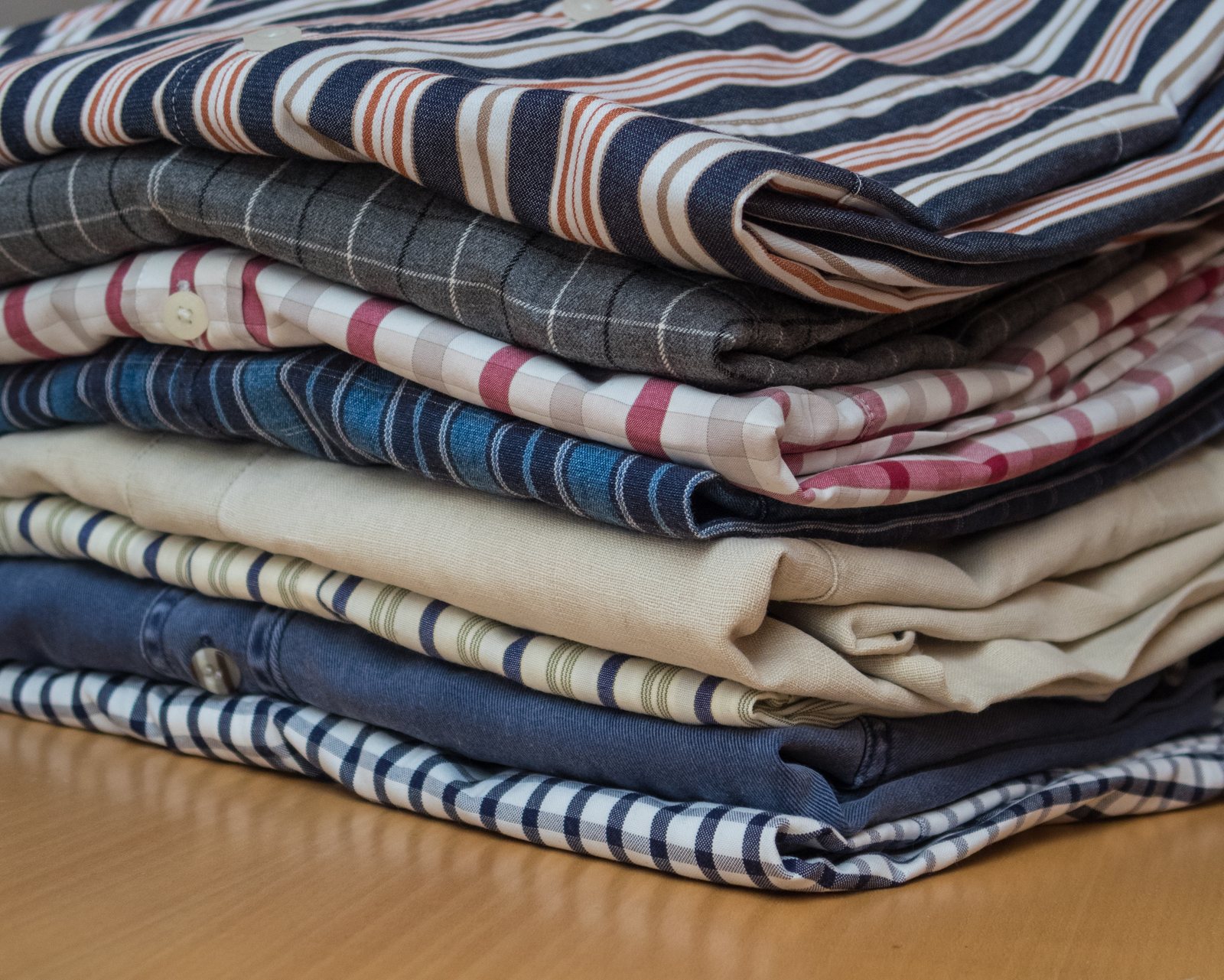
Shirting fabrics cover a wide weight range, and a difference of 20 or 30 gsm is easy to feel in the finished shirt. Weight affects how transparent the cloth is, how it drapes, how warm it is and how crisp the collar looks. The pattern also plays a part: plain, striped and check shirts tend to sit at different points in the range.
The weight bands
| Weight | Character | Typical shirt |
|---|---|---|
| 85-100 gsm | Very light, airy, can be slightly translucent in pale colours | Summer shirts, fine dress shirts, layering |
| 100-125 gsm | The classic shirting weight, crisp and opaque | Business and everyday shirts |
| 125-145 gsm | Firmer, more body | Casual shirts, heavier checks, cotton-linen |
| 145-165 gsm | Substantial, heavy drape | Overshirts, relaxed and cold-weather shirts |
For reference, 100 gsm is about 2.9 oz/yd², and 165 gsm about 4.9 oz/yd².
Plain shirts
A plain shirt shows the cloth itself, so the weight and surface matter more than on a patterned one. A white or pale plain shirting needs enough density to be opaque: around 100-125 gsm in a tight poplin or oxford is the usual choice for business shirts. Lighter plains, below 100 gsm, suit summer shirts and darker colours, where transparency is less of an issue. Heavier plains, above 130 gsm, work for casual and overshirt styles, especially in darker or earthy colours.
Striped shirts
Stripes are usually yarn-dyed: the yarns are coloured before weaving, and the stripe is built in the warp. Fine stripes look sharpest on light, smooth cloths, which is why many classic striped business shirts sit around 85-115 gsm. Bolder, wider stripes can carry a heavier base cloth for a casual shirt. Because the stripe is woven in, colour stays crisp through washing, but check that the stripe runs straight and that it is balanced for your pattern pieces.
Check shirts
Checks use coloured yarns in warp and weft. Fine checks, such as gingham, sit comfortably in the light and classic bands. Larger checks and brushed or flannel-style checks are usually heavier, from about 130 gsm upwards, for casual and cold-weather shirts. Check fabrics can show a weight range rather than a single figure, because areas of different yarn density weigh differently; our PM-04 check, for example, is quoted at 95-115 gsm. Checks also need matching at seams, pockets and yokes, which uses more fabric per shirt.
Fibre changes the feel at every weight
- 100% cotton: the reference point, from fine poplin to substantial twills and oxfords.
- Organic cotton: behaves like conventional cotton at the same weight and construction.
- Cotton-linen: feels cooler and drier than cotton of the same weight, with visible texture.
- Cotton-elastane: adds comfort stretch, useful for slim fits.
- Lyocell: a heavier, more fluid drape; at 165 gsm it moves more like a soft overshirt than a crisp shirt.
Our shirting by weight
Our shirting collection runs from 85 to 165 gsm across 18 qualities, at widths of 144-158 cm. The lightest is PM-01, a blue and white stripe at 85 gsm. The classic middle includes plains such as PM-05 and PM-06 (105-108 gsm), the grey and white stripe PM-07 (110-115 gsm) and the check PM-04. Heavier qualities include PM-11 (120-150 gsm), the organic OP-03 (137 gsm) and the 100% lyocell LY-01 (165 gsm).
Tell us the shirt, the pattern and the season, or quote the codes you want to compare, and we will send samples so you can judge the weight in the hand.