What is lyocell, and why is it in shirting and trousers?
Lyocell is a cellulose fibre made from wood pulp. It adds drape, smoothness and a cool touch to cotton and linen, which is why it turns up in so many blends.
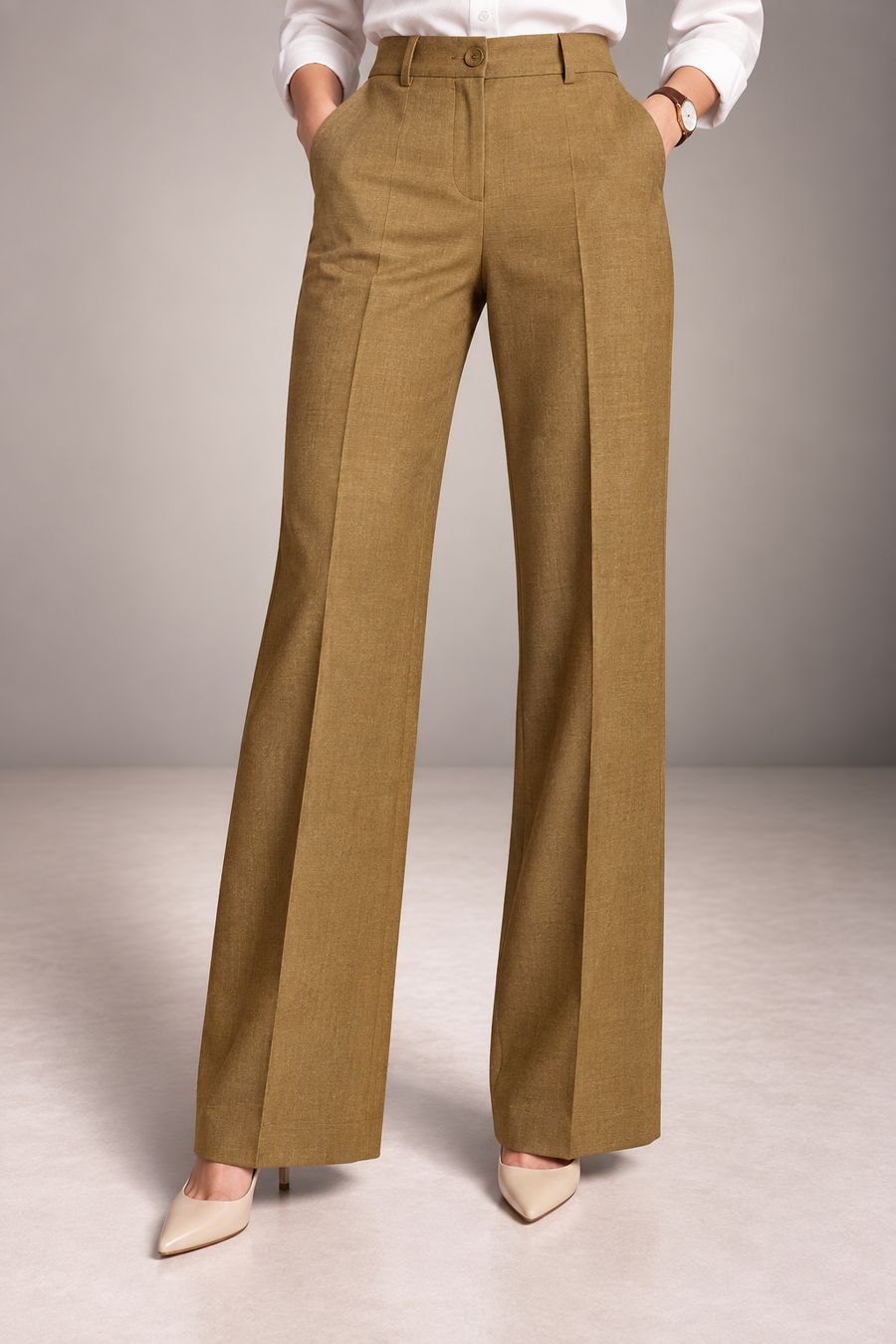
Lyocell appears on more and more composition labels, often next to cotton, linen or modal. It is neither a natural fibre in the way cotton is, nor a synthetic like polyester. Knowing where it sits explains why it is used and what to watch for.
What lyocell is
Lyocell is a regenerated cellulose fibre. It starts as wood pulp, which is dissolved directly in an organic solvent, N-methylmorpholine N-oxide (NMMO), and then extruded through fine holes into a bath where the cellulose solidifies again as a fibre. The solvent is recovered and reused in a largely closed loop. That direct solvent process is what distinguishes lyocell from older viscose processes, which rely on chemical conversion of the cellulose.
The best-known brand of lyocell is TENCEL Lyocell, but lyocell is the generic fibre name used on labels.
How it feels and behaves
- Smooth and cool: the fibres are regular and round, so the cloth feels smooth and slightly cool to touch.
- Fluid drape: lyocell falls more softly than cotton of the same weight.
- Absorbent: as a cellulose fibre it takes up moisture well, which keeps it comfortable in warm conditions.
- Strong: it is strong both dry and wet, stronger than viscose when wet.
- Takes dye well: colours come out clear, and it can be dyed and printed with the same reactive dyes as cotton.
Fibrillation
The main technical point with lyocell is fibrillation. When the wet fibre is rubbed, tiny fibrils can split from its surface, which shows as a white, frosted look, particularly on dark colours. Finishers control this with enzyme treatments and specific processing, and in some fabrics they use it deliberately to create a soft peach-skin surface. When you assess a lyocell fabric, ask how it has been finished and wash a sample before approving it.
Why blend it
Blending lyocell with other fibres adds its best qualities to theirs:
- With cotton: a softer drape and smoother surface than pure cotton, while keeping cotton's familiar handle. Common for trousers that should hang cleanly rather than stand stiff.
- With linen: lyocell softens linen's crisp handle and reduces its tendency to crease sharply, while keeping its cool character.
- With modal: two cellulose fibres together give a very soft, fluid cloth.
- With elastane: a few percent adds comfort stretch and recovery, especially in trousers.
Lyocell in our collections
In our shirting collection, LY-01 is 100% lyocell at 165 gsm, the heaviest of the shirting qualities, with a smooth and weighty drape. In the trouser collection, five cotton-lyocell qualities (PL-01 to PL-05) run from 180 to 290 gsm, with between 26% and 50% lyocell and 2-4% elastane. ML-01 blends modal and lyocell, and KT-01 blends linen and lyocell for a light summer trouser.
What to check
- Dimensional change after washing, since cellulose blends can move more than pure cotton.
- Appearance after repeated washes, particularly on dark shades.
- Care instructions: gentle washing and moderate heat keep the surface at its best.
- Abrasion and pilling, especially on trousers, where the inner thigh and seat take the most wear.
- Colour consistency between lots, since cotton and lyocell can take up dye at slightly different rates in a blend.
Lyocell costs more than cotton as a raw fibre, so a higher lyocell share usually raises the price of the cloth. For many garments a blend gives most of the drape and smoothness at a more moderate cost than pure lyocell.
If you are weighing a lyocell blend against pure cotton for a garment, send us the style and we will suggest qualities to compare side by side.