Organic cotton shirting: what organic does and does not change
Organic describes how the cotton was grown, not how the shirt fabric feels. Knowing the difference helps you specify and label it correctly.
Organic cotton shirting is widely requested, and it is worth being precise about what the word covers. It is a claim about how the cotton fibre was farmed and how it has been kept separate through the supply chain. It is not, by itself, a claim about the quality of the finished cloth.
What organic means for the fibre
Organic cotton is grown under organic farming rules. In general terms that means:
- No synthetic pesticides or synthetic fertilisers.
- No genetically modified seed.
- Farming practices that aim to maintain soil fertility, such as crop rotation.
- Fields that have been through a conversion period before their cotton can be sold as organic.
Farms are inspected and certified against organic regulations in the country where the cotton is grown. Organic cotton is still a small share of world cotton production, which is one reason it usually costs more than conventional cotton and why its availability in a given yarn count can vary.
How the claim travels to the fabric
Once the cotton leaves the farm, the organic claim has to be kept intact through ginning, spinning, weaving and finishing. Two textile standards are widely used for this. The Organic Content Standard (OCS) verifies the presence and amount of organic fibre in a product and tracks it through the chain. The Global Organic Textile Standard (GOTS) goes further and also sets environmental and social criteria for processing, including restrictions on dyes and chemicals.
If you intend to sell a garment as organic, ask your supplier which standard covers the fabric and what documents, such as transaction certificates, accompany each shipment. The labelling claim you can make depends on those documents, not on the composition line alone.
What organic does not change
At the level of the cloth, organic cotton behaves like conventional cotton of the same fibre quality. Choosing organic fibre does not change:
- Weight and construction: an organic poplin at 99 gsm is built the same way as a conventional one.
- Hand-feel: softness depends on the fibre length, the yarn count, the weave and the finish, not on how the cotton was farmed.
- Shrinkage: organic cotton shrinks like any cotton unless it is stabilised in finishing.
- Colour fastness: this depends on the dye, the process and the shade, and should be tested in the usual way (for example ISO 105-C06 for washing and ISO 105-X12 for rubbing).
- Care: the washing and ironing instructions follow the cloth, not the farming method.
So an organic shirting should be judged exactly as any other: on the swatch, by the specification, and through the tests your product needs.
Dyeing and finishing
Organic fibre can be dyed and finished in the normal way. Where a fabric is intended for a GOTS-labelled product, the dyes and chemicals used must also meet that standard's requirements, which is something to agree before production rather than after. The same applies to any finish, such as softening or easy-care treatments: check that it fits the standard you intend to label against.
Our organic shirting
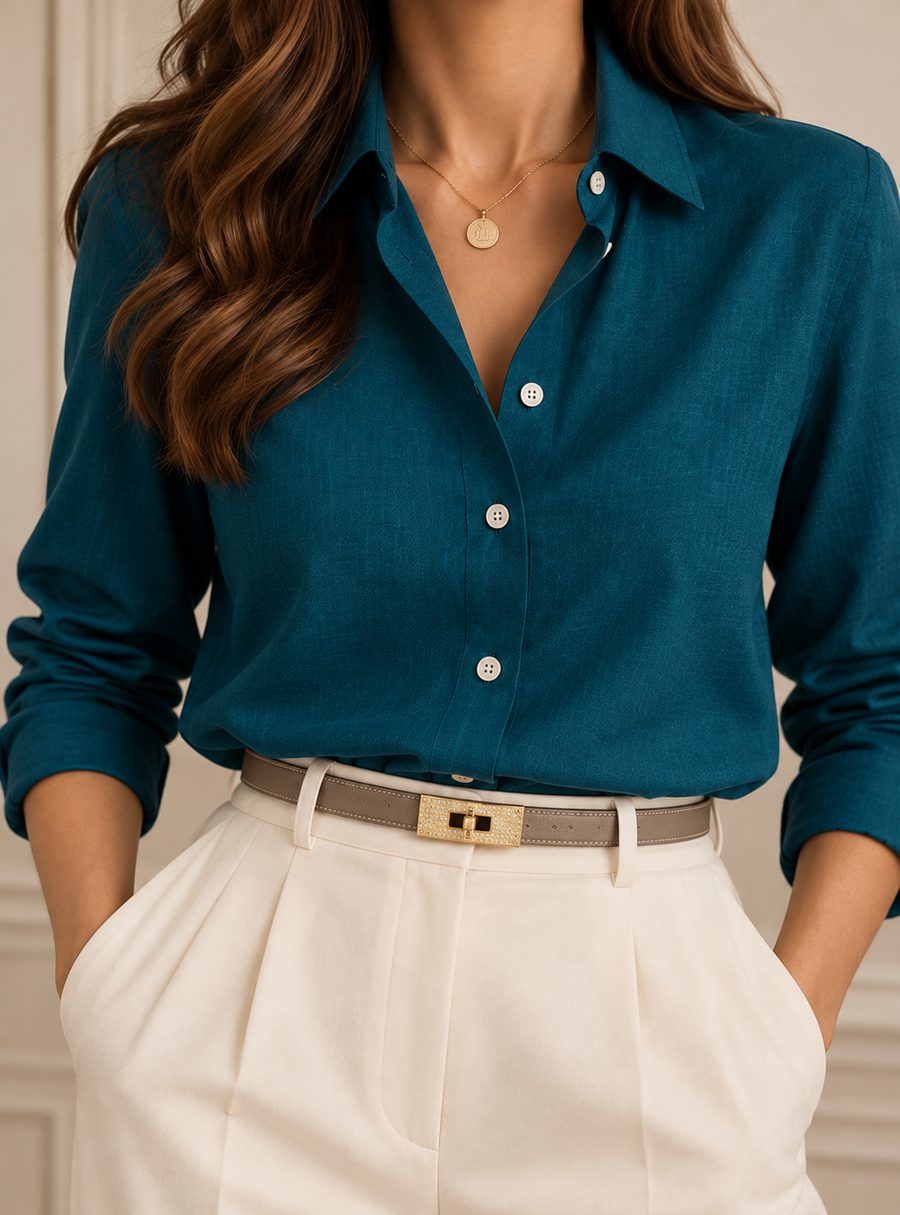
Three qualities in our shirting collection are 100% organic cotton: OP-01 in petrol blue at 91 gsm, OP-02 in beige at 99 gsm, and OP-03 in purple at 137 gsm. They sit alongside our conventional 100% cotton shirting in the same weight range, so you can compare them directly. Ask us for samples by code, and tell us how you plan to label the garment so we can discuss the documentation it needs.