Stain resistance on aprons and table linen: what finishes can do
A finish can help an apron shed spills or a tablecloth release stains in the wash, but it cannot make cotton stain-proof. What to expect and what to specify.
Aprons and table linen meet oil, wine, sauce and coffee every day, so buyers often ask for a stain-resistant finish. Finishes can make a real difference, but they are often oversold. It helps to know which kind of finish does what, how long it lasts, and what it takes away from the cotton.
Two different approaches
Repellent finishes make the fibre surface repel liquids, so that spills bead up and can be wiped or shaken off before they soak in. Stain release finishes, also called soil release, work the other way round: they make the fibre more hydrophilic so that water and detergent can get underneath oily stains and lift them out in the wash. Some finishes combine both effects, repelling in use and releasing in the wash.
Water repellency is easier than oil repellency
Historically, the most effective repellent finishes were fluorocarbons, which repel both water and oil. Many per- and polyfluorinated substances (PFAS) are now restricted or being phased out in several markets because they persist in the environment, and much of the textile industry has moved away from them.
Fluorine-free repellents based on silicones, waxes, hydrocarbons or dendrimers give good water repellency, so a spilt glass of water or wine beads up nicely. Their oil repellency is much weaker. Cooking oil, butter and salad dressing will still soak into the cloth. For aprons and table linen, where oily stains are the main problem, this is an important limitation.
What a finish costs you
- Durability. Repellent finishes wear with washing and abrasion. Performance usually drops over repeated washes, and some finishes need heat, such as tumble drying or ironing, to restore it. Industrial laundering at high temperatures shortens their life further.
- Absorbency. A repellent finish makes cotton shed water. That is wanted on an apron bib but not on a tea towel or a napkin, which exist to absorb.
- Hand. Finishes can make cotton slightly firmer or waxy to the touch.
- Printing. Repellent-finished fabric resists print pastes and inks, so finishing normally comes after printing. This affects process planning and cost.
How performance is measured
Water repellency is often tested by the spray test in ISO 4920, which rates the wetting pattern on a scale from 0 to 100. Oil repellency is graded under ISO 14419, using a series of hydrocarbon liquids of decreasing surface tension. Asking for ratings both before and after a stated number of washes gives a realistic view of durability.
Stain resistance without chemistry
Several choices reduce visible staining before any finish is applied:
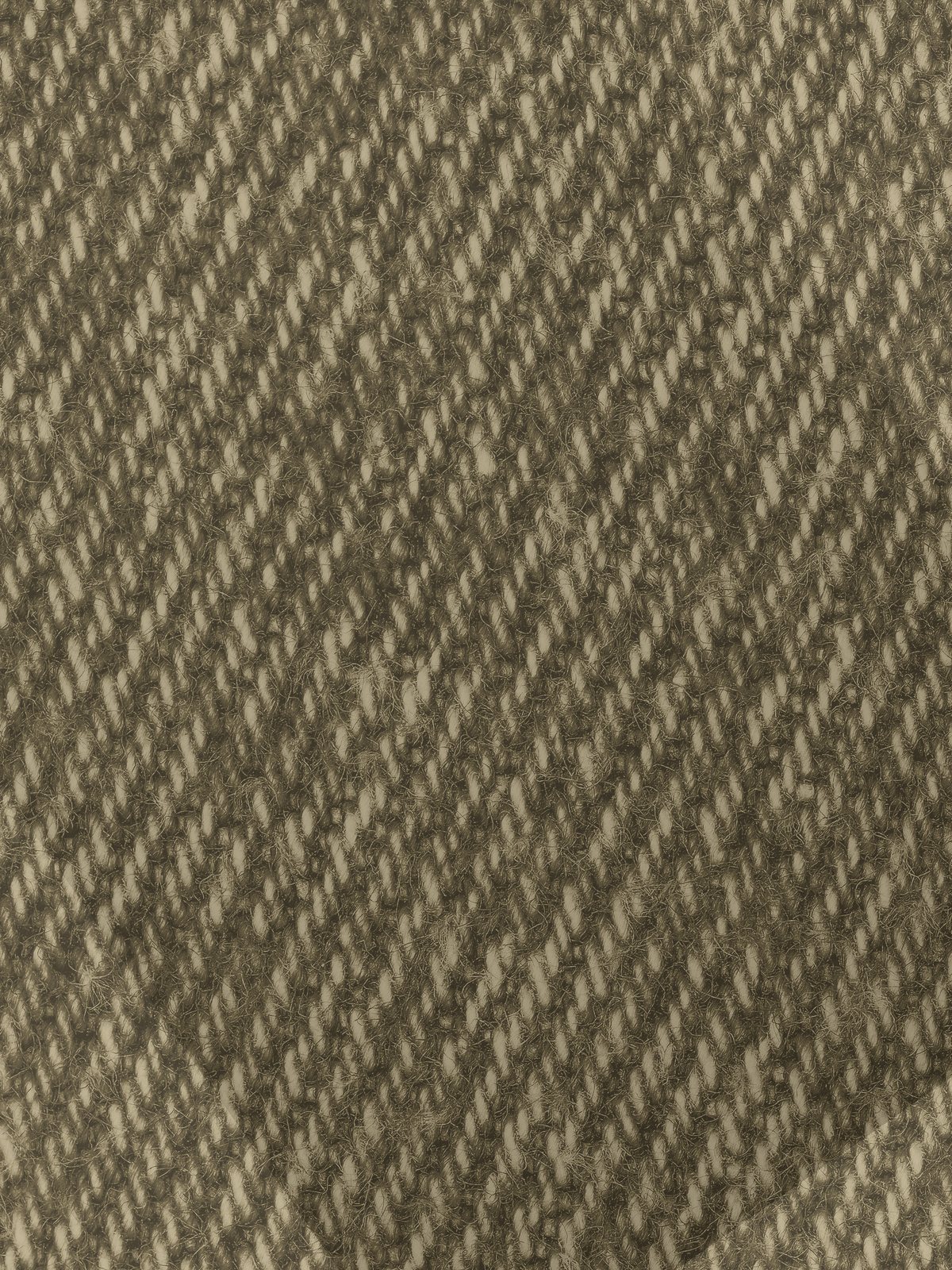
- Construction. A dense weave like drill slows the spread of spills and releases stains better in washing than an open cloth.
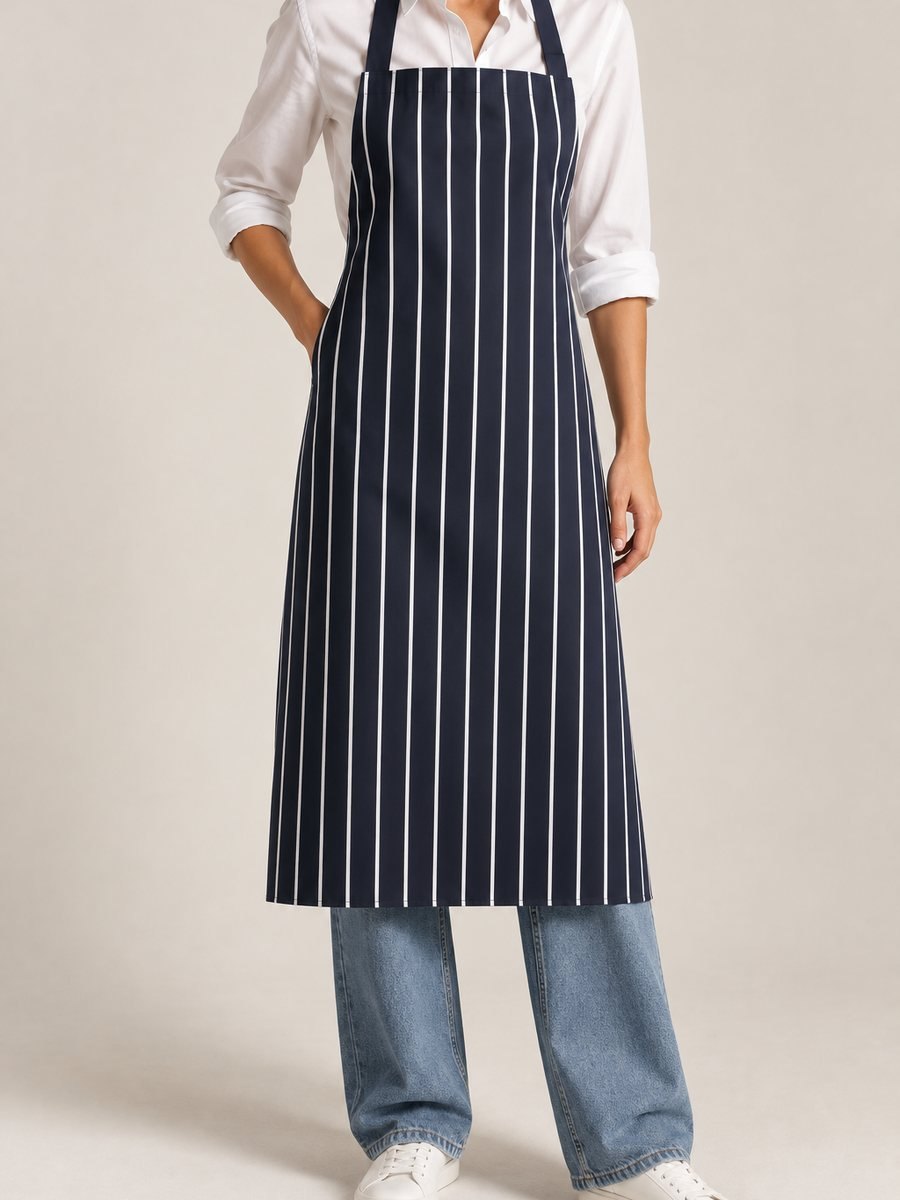
- Colour and pattern. Mid and dark shades, stripes and prints hide marks that would show on white or pale plains. This is one reason the striped bib apron is a kitchen classic.
- Launderability. Cotton tolerates hot washing well. A well-fixed colour that survives frequent washing at the right temperature often serves better than a finish that washes away.
- Prompt care. Blotting spills, rinsing in cold water and washing soon remain the most effective stain treatment.
Choosing for your product
For aprons, a dense cotton drill in a mid or dark shade or a stripe is the strongest starting point, with a fluorine-free repellent considered where water-based spills are the main concern. For table linen, stain release and good wash fastness usually matter more than repellency. Our apron fabrics include Cotton Drill at 255 gsm and a striped bib apron collection in four colourways, and we develop finishes on request. Tell us about your use and laundry conditions through our contact page.