Softeners and easy-care finishes on cotton: gains and costs
Softeners and easy-care finishes change how cotton feels and how it looks after washing. Both come with trade-offs worth knowing before you specify them.
Final finishing decides much of how a cotton fabric feels when a customer first picks it up, and how it behaves after washing. Softeners and easy-care (crease-resistant) finishes are two of the most widely used chemical finishes. Both do useful work, and both take something from the fabric in return.
What a softener does
After scouring, bleaching, dyeing and printing, cotton can feel harsh and dry. A softener is applied, usually by padding the fabric through a bath and then drying it on a stenter, to lubricate the fibre surface. The effects are:
- a softer, smoother or fuller handle;
- better drape;
- easier sewing, because a lubricated fabric is less likely to be damaged by the needle;
- in some cases, slightly improved tear strength, because yarns can slide and share the load.
The main types
| Type | Typical character | Watch for |
|---|---|---|
| Cationic (fatty) | Very soft, full handle at low cost | Can reduce absorbency and cause yellowing on white |
| Non-ionic | Mild softness, good compatibility with other chemicals | Less durable to washing |
| Silicone (amino-functional and others) | Silky, slippery handle, durable | Some types reduce absorbency or cause slight yellowing; can affect print appearance |
| Hydrophilic silicone | Soft handle while keeping more absorbency | Higher cost |
What softeners cost the fabric
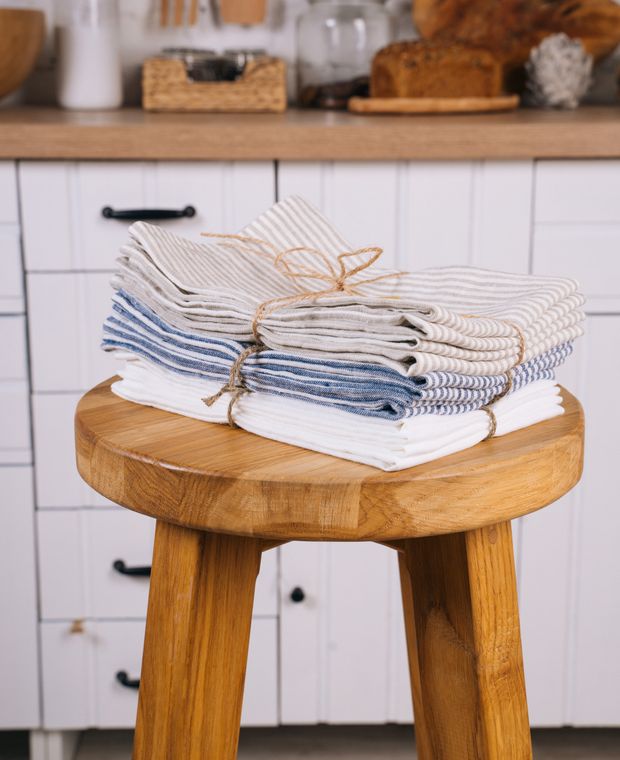
The trade-off most relevant to home textiles is absorbency. Many softeners coat the fibre with a slightly water-repellent film. On a shirt that hardly matters; on a tea towel or kitchen cloth it can be the difference between a cloth that wipes and one that pushes water around. For absorbent products, a light or hydrophilic softener, or none at all, is usually the better choice, and absorbency improves further after the first washes.
Other costs to check are a possible change in shade (softeners can deepen or slightly shift some colours), yellowing on whites, and a slight effect on rubbing fastness or on how well a later print or coating adheres. Softeners also wash out over time, so the handle a customer feels in the shop is not always the handle after twenty washes.
Easy-care finishes
Cotton creases because its cellulose chains, bent when the fabric is folded, form new hydrogen bonds in the bent position, particularly when damp. Easy-care, crease-resistant or "non-iron" finishes reduce this by forming chemical crosslinks between the cellulose chains, so the fibre tends to spring back to its original shape.
The usual chemistry is a resin based on modified DMDHEU (dimethylol dihydroxy ethylene urea), applied with a catalyst and a softener, dried and then cured at high temperature. The finish improves smoothness after washing, raises crease recovery and reduces shrinkage.
What easy-care finishes cost the fabric
- Strength: crosslinking makes the fibre less able to share stress. Tear and tensile strength and abrasion resistance fall, sometimes considerably, so fabrics intended for a resin finish are often built with a margin of strength to start with.
- Formaldehyde: older resins released free formaldehyde. Modern low-formaldehyde and ultra-low types reduce this greatly, but many buyers test for it and set limits, especially for items worn next to the skin.
- Handle and absorbency: resin-finished cotton feels firmer and absorbs moisture less readily, which is why a softener goes into the same bath.
- Colour: curing can shift some shades slightly, which needs to be allowed for in approvals.
Mechanical routes, such as compressive shrinkage and careful mercerising, give some of the stability benefits without resin, and many buyers now prefer them where full non-iron performance is not essential.
Choosing a finish
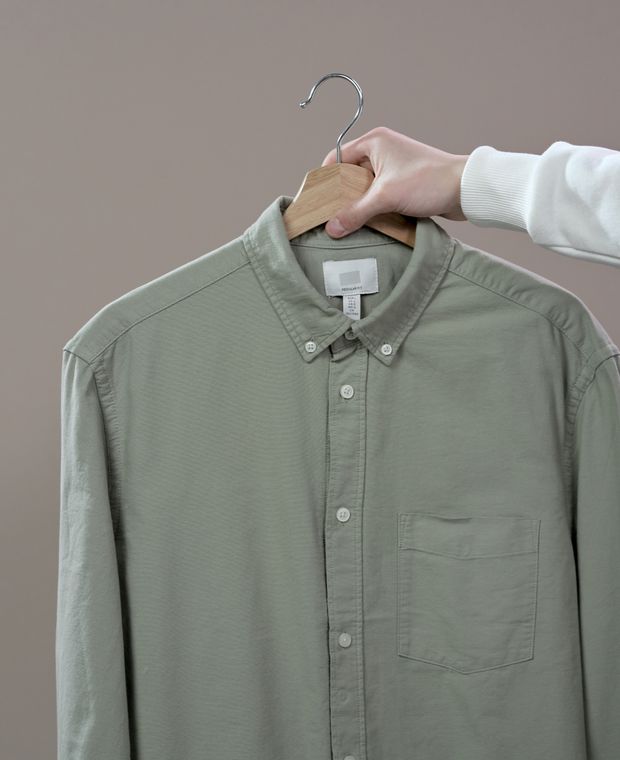
Start from the product. Shirting may benefit from a silicone softener and, for some programmes, an easy-care finish. Tea towels and kitchen cloths, like our tea towel fabrics, usually need absorbency more than softness. For shirting, tell us the handle, care and test requirements you have in mind, and contact us to discuss what finish is appropriate.