Textiles in contact with food: what food-safe means for cloths
Muslin, cheesecloth and lemon wraps touch food directly. Here is what food-safe certification means for a textile and what a buyer should ask to see.
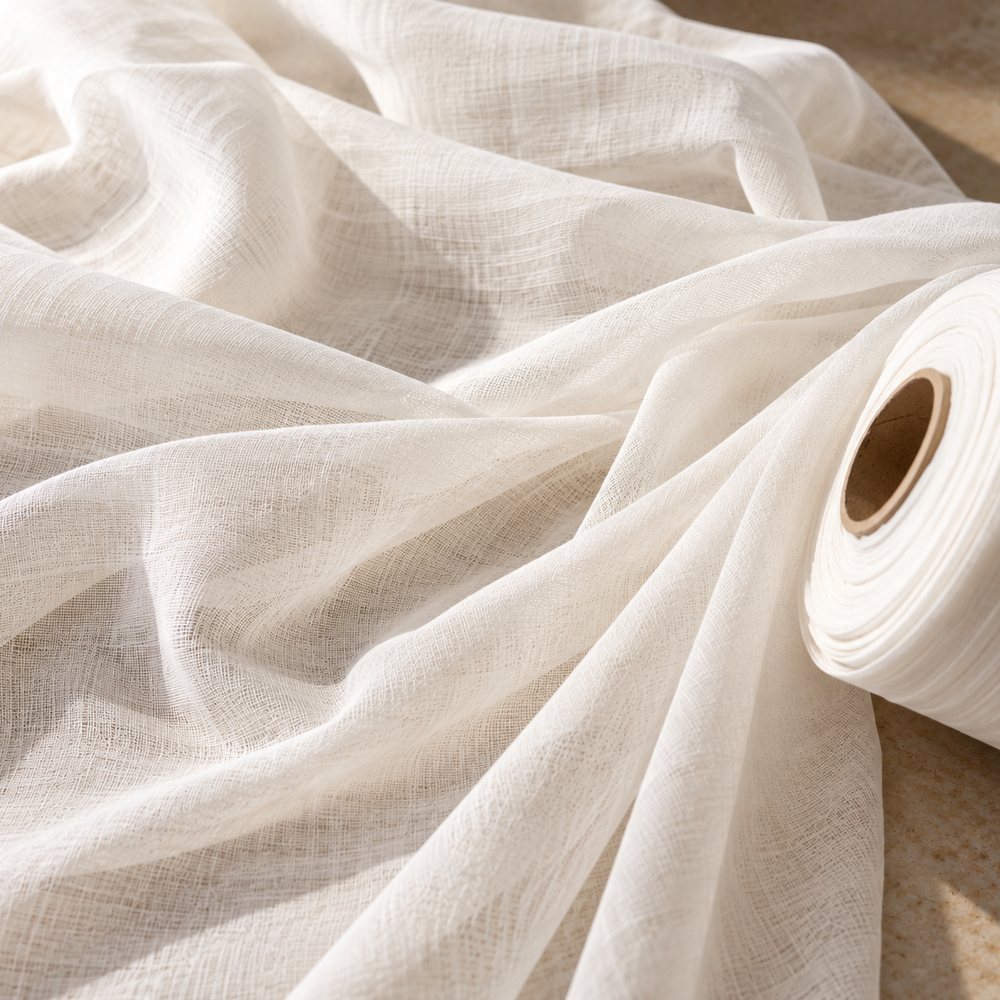
Most textiles in a kitchen never touch food directly. An apron or a tea towel is close to it, but a tea towel is a drying cloth, not a food wrap. Some textiles, though, are used precisely because they touch food: muslin for straining stocks, cheesecloth for draining curd, lemon wraps at the table, cloths for covering dough or wrapping cheese. For those, the question is not only whether the cloth works but whether it is safe to use in contact with food.
What "food contact material" means
A food contact material is anything intended to come into contact with food, or reasonably expected to: packaging, containers, utensils, machinery and, when they are used that way, textiles. The concern is migration, meaning that substances from the material could transfer into the food. For a cotton cloth, the fibre itself is not usually the issue. The questions are about what else the cloth carries: sizing agents from weaving, finishing chemicals, optical brighteners, softeners, dyes and any residues from processing.
The general framework in the EU
In the European Union, the general rules for all food contact materials are set by Regulation (EC) No 1935/2004. In broad terms it requires that materials, under normal and foreseeable conditions of use, do not transfer their constituents to food in quantities that could endanger human health, bring about an unacceptable change in the composition of the food, or deteriorate its taste and odour. It also requires traceability, so that a material can be followed back through the supply chain.
Some materials, notably plastics, have their own detailed EU measures with specific migration limits. Textiles do not have a dedicated harmonised EU measure of that kind, so textiles intended for food contact are assessed against the general requirements, and national rules and testing practice fill in the detail. Other markets have their own frameworks. This is a general overview, not legal advice, and a food business should confirm what applies in its own market.
What certification should tell you
When a supplier says a cloth is certified safe for direct contact with food, the paperwork behind that claim should answer a few practical questions:
- Which product: the certificate or declaration should name the specific product, not just the company.
- Under what conditions: contact with which types of food (wet, fatty, acidic, dry), at what temperatures and for how long.
- On what basis: whether it rests on testing of the finished cloth, and by whom.
- Traceability: whether your delivery can be linked to the tested and certified production.
What makes a cloth suitable
| Factor | What to look for |
|---|---|
| Fibre | 100% cotton, with no synthetic content that could shed or melt |
| Finish | No unnecessary chemical finishes, softeners or optical brighteners |
| Colour | Undyed, or dyed only where the colorant has been assessed for the use |
| Cleanliness | Clean cut, low lint, packed so it stays clean until use |
| Durability | Holds together when wet, hot or under tension, so fibres do not end up in food |
In the kitchen
Certification covers the cloth as supplied. Hygiene after that is the kitchen's responsibility. Keep cloths for food contact separate from cleaning cloths, store them closed and dry, wash and sanitise reusable cloths according to your hygiene plan, and discard any that are torn or stained. Single-use items such as lemon wraps should be used once.
Our muslin products
Mekan Textile's chef's muslin, cheesecloth and lemon wraps are 100% cotton and certified safe for direct contact with food. You can find them on our muslin and cheesecloth page. If you need to see the certification for your own records before ordering, contact us and we will send the documentation with a sample.