Cooking muslin: what chefs use it for and which cloth to buy
Cooking muslin is the plain, open-weave cotton cloth kitchens use to strain, wrap, hang and cover food. Here is what it does, how to choose it and how professional kitchens buy it.
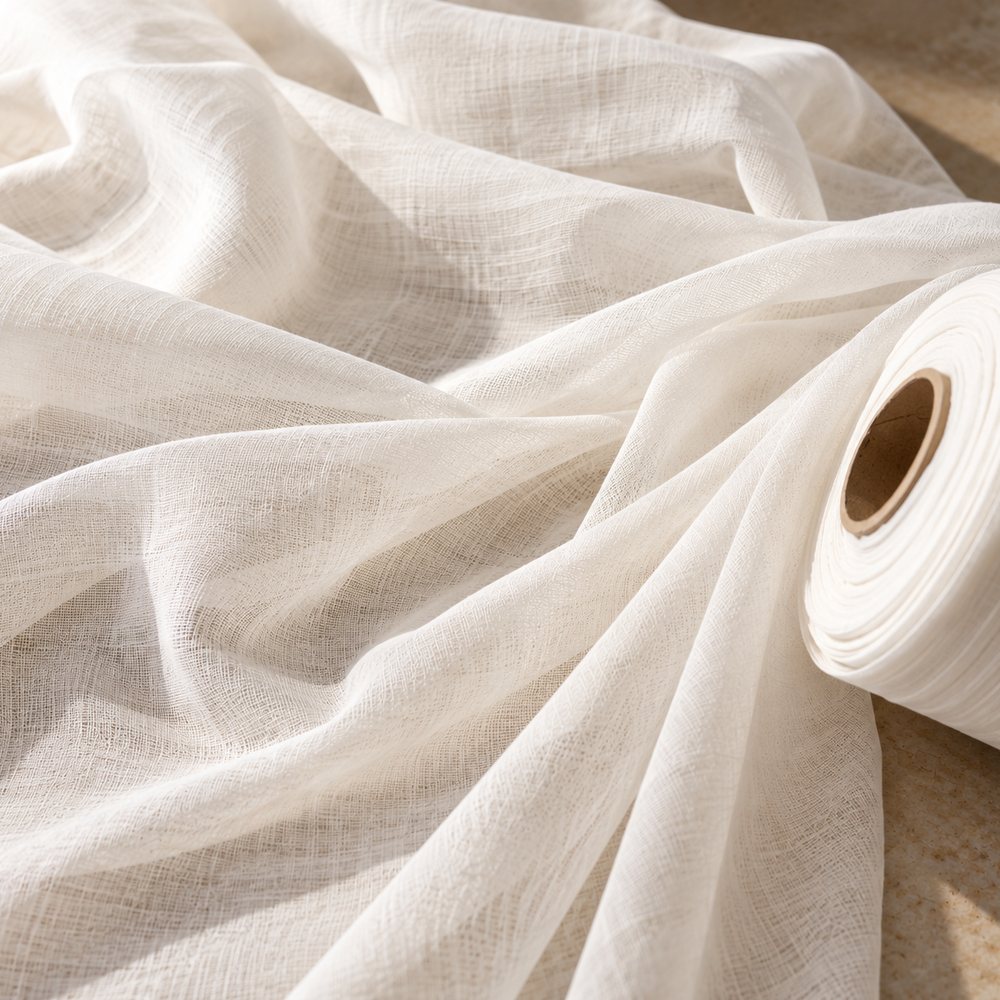
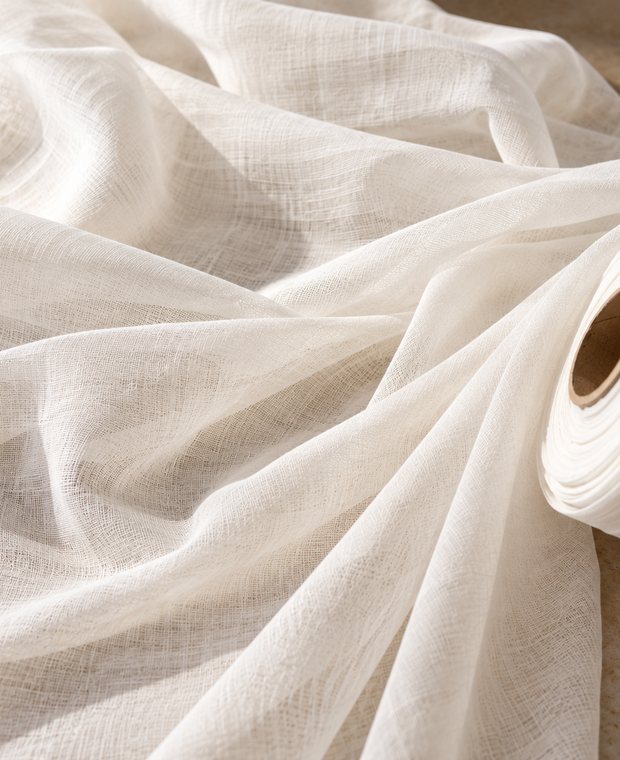
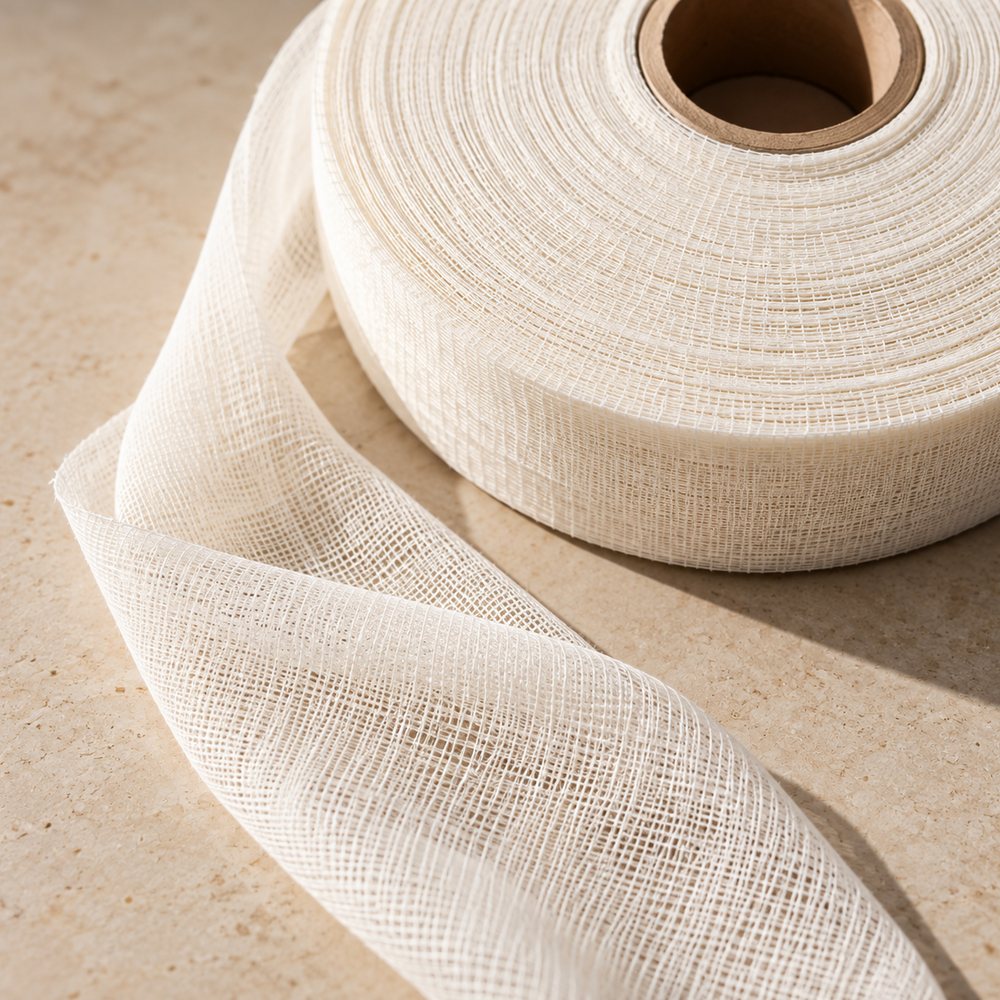
Cooking muslin is a light, loosely woven cotton cloth used in kitchens to strain liquids, wrap herbs and spices, hang yoghurt or cheese and cover food. It works because the gaps between its fine yarns let liquid through while holding solids back, and because plain cotton tolerates heat and repeated washing. For a professional kitchen, the right cloth is 100% cotton, free of unnecessary finishes and certified safe for direct contact with food.
The same cloth goes by several names: chef's muslin, cooking muslin, muslin cloth, cheesecloth and butter muslin. This guide explains what kitchens use it for, how the names differ, what to check before buying and how it is usually supplied. For the fabric itself (weave, weight and history), see what muslin fabric is and how it is woven.
What kitchens use cooking muslin for
Muslin earns its place in a kitchen because one cheap, washable cloth does several jobs that otherwise need separate tools.
| Job | What the muslin does | What matters most |
|---|---|---|
| Straining stocks, consommé and sauces | Catches fine particles a sieve lets through | A fine, even weave and low lint |
| Jellies, jams and fruit syrups | Lets juice drip clear without pressing | Fine weave, enough strength to hang when wet |
| Hanging yoghurt, labneh and soft cheese | Drains whey over hours | Openness matched to the curd, strength when wet |
| Bouquet garni and spice bags | Holds aromatics so they lift out in one piece | Tight enough to hold seeds and small leaves |
| Wrapping and poaching | Holds a shape (a terrine, a ballotine, a pudding) during cooking | Heat tolerance and a cloth that does not stretch out |
| Covering dough and trays | Keeps dust off while air moves | Breathability and cleanliness |
| Lemon wraps at the table | Holds back pips and pulp when diners squeeze | Fine mesh, clean cut, single use |
Most kitchens keep one general muslin for straining and wrapping, and buy a more open cheesecloth only if they make fresh cheese in volume. Hotels and restaurants often buy lemon wraps ready made; we cover those in muslin lemon wraps for hotels and restaurants.
Cooking muslin, cheesecloth and butter muslin
The names overlap, and suppliers use them loosely. All three describe a light, open plain-weave cotton. The differences are about how open the cloth is and what it is sold for.
- Cooking muslin or chef's muslin usually means a fine, open plain weave suited to straining clear liquids and wrapping. It is the general-purpose kitchen cloth.
- Cheesecloth usually means a muslin sold for dairy and food work, often in more open grades so whey runs off curd quickly. Our post on cheesecloth for dairies explains how dairies choose it.
- Butter muslin is a traditional name for a finer, closer muslin used for butter and soft cheeses, where a more open cloth would let too much through.
Because the words are not standardised, ask the supplier for the construction (how many yarns per centimetre in each direction, and the weight) and tell them the job. Two cloths with the same name can drain at very different speeds.
How to choose cooking muslin
Five checks cover nearly every kitchen buying decision.
- Fibre. 100% cotton. It absorbs, withstands hot washing and boiling, and does not melt. Blends with synthetic fibre can shed or soften under heat.
- Openness. Match it to the job: finer for stocks, jellies, spice bags and lemon wraps, more open for draining fresh curd. If one cloth must do everything, choose the finer one: it drains more slowly, but it holds back what a more open cloth lets through.
- Finish. Undyed, with no softeners, optical brighteners or other finishes the use does not need. Softener in particular reduces absorbency and can leave a taste.
- Food contact certification. In the EU, Regulation (EC) No 1935/2004 sets the general rule that materials touching food must not transfer substances into it in harmful quantities or change its taste and smell. Ask for documentation that names the product. Our guide to textiles in contact with food explains what that paperwork should show.
- Weight and consistency. Fabric weight is measured by weighing a sample of known area (ISO 3801 describes the method). With muslin, the thread count and the evenness of the gaps often tell you more than the gsm figure, so judge a sample by straining something with it, not only by the label.
Preparing and reusing cooking muslin
New muslin straight off the roll carries loose fibres and has not yet shrunk. Most chefs wash it before first use: a cold rinse, a hot wash with a small amount of unscented detergent, two rinses and a full dry. Many then boil it in plain water before use. An open weave relaxes and shrinks noticeably in that first wash, so cut generously or wash a length before cutting it to fit a mould. The full routine, including what to avoid, is in how to wash muslin before kitchen use.
After use, rinse in cold water first, because hot water sets proteins such as milk and egg into the cloth, then wash and dry as before. Keep food muslin apart from cleaning cloths, store it dry and covered, and replace it when it thins, tears or holds a smell boiling does not remove.
How professional kitchens buy it
Retail packs of a metre or two suit a home cook. A restaurant, hotel group, caterer or central production kitchen uses muslin every day and cuts it to many different sizes, so it usually buys by the roll or as folded pieces and keeps a supply in the dry store.
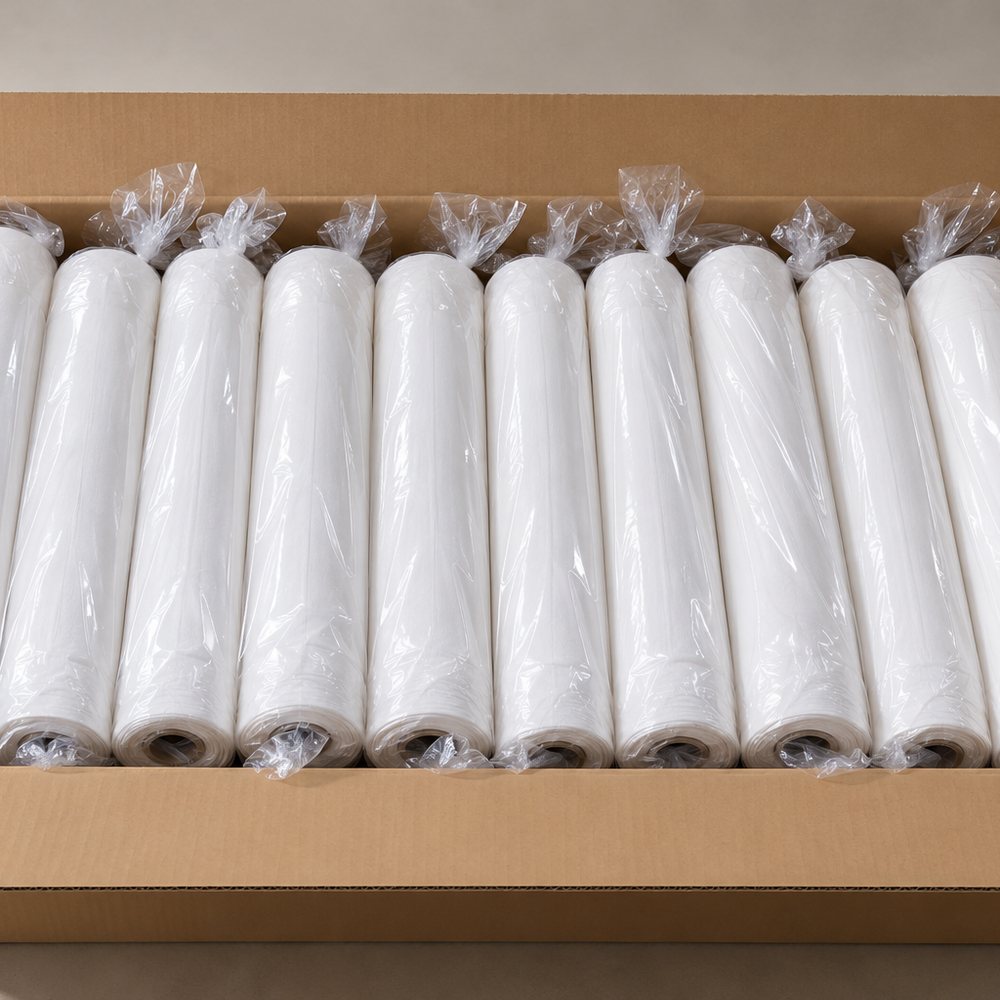
Format is a practical choice. A small roll at each station keeps the cloth fresh and close to hand. A large roll or a book-folded piece at a central prep bench is easier when one person cuts pieces for the whole kitchen. We compare the formats in how muslin is packed for kitchens.
Wholesalers and catering suppliers who resell muslin should also think about packing: each roll or piece wrapped individually, in closed cartons, so the cloth reaches the kitchen clean, dry and free of odours. Cotton absorbs smells easily, so store it away from chemicals and cleaning products.
Our cooking muslin
Mekan Textile weaves a fine, open plain-weave 100% cotton chef's muslin in Türkiye. We supply it as 10 m and 50 m rolls and as folded 50 m pieces, and make cheesecloth for dairies and muslin lemon wraps from the same family of cloth. All of it is certified safe for direct contact with food. You can see the range on our muslin and cheesecloth page.
If you buy for a kitchen, a group of restaurants or a catering supply range, tell us how the cloth will be used (straining, cheese, wrapping or lemon wraps), which format suits your store and roughly how much you use, and we will send a sample with the food contact documentation.
Common questions
What is cooking muslin?
A light, open plain-weave cotton cloth used in kitchens to strain liquids, wrap herbs and spices, hang yoghurt or cheese and cover food. Liquid passes through the gaps between the yarns while solids stay behind.
Is cheesecloth the same as muslin?
They are the same family of fabric: a light, open plain-weave cotton. In practice cheesecloth usually means a muslin sold for dairy and food work, often more open, while cooking or chef's muslin tends to be finer for straining clear liquids.
What is butter muslin?
Butter muslin is a traditional name for a finer, closer muslin used for butter and soft cheeses, where a more open cheesecloth would let too much through. Ask for the construction rather than relying on the name, because the term is used loosely.
Can I use any cotton fabric instead of cooking muslin?
Not reliably. A tightly woven cotton drains slowly, and fabric not made for food may carry softeners, brighteners or dyes. Use undyed cotton muslin that is certified for direct food contact.
Can cooking muslin be reused?
Yes, if it is rinsed in cold water straight after use, washed hot without softener and dried fully. Replace it when it thins, tears or keeps a smell. Single-use items such as lemon wraps are used once.