Open weave cotton fabric: types, uses and how to specify it
Muslin, cheesecloth, gauze and leno are all open weave cottons. Here is what makes a weave open, what each type is used for and what to put in a specification.
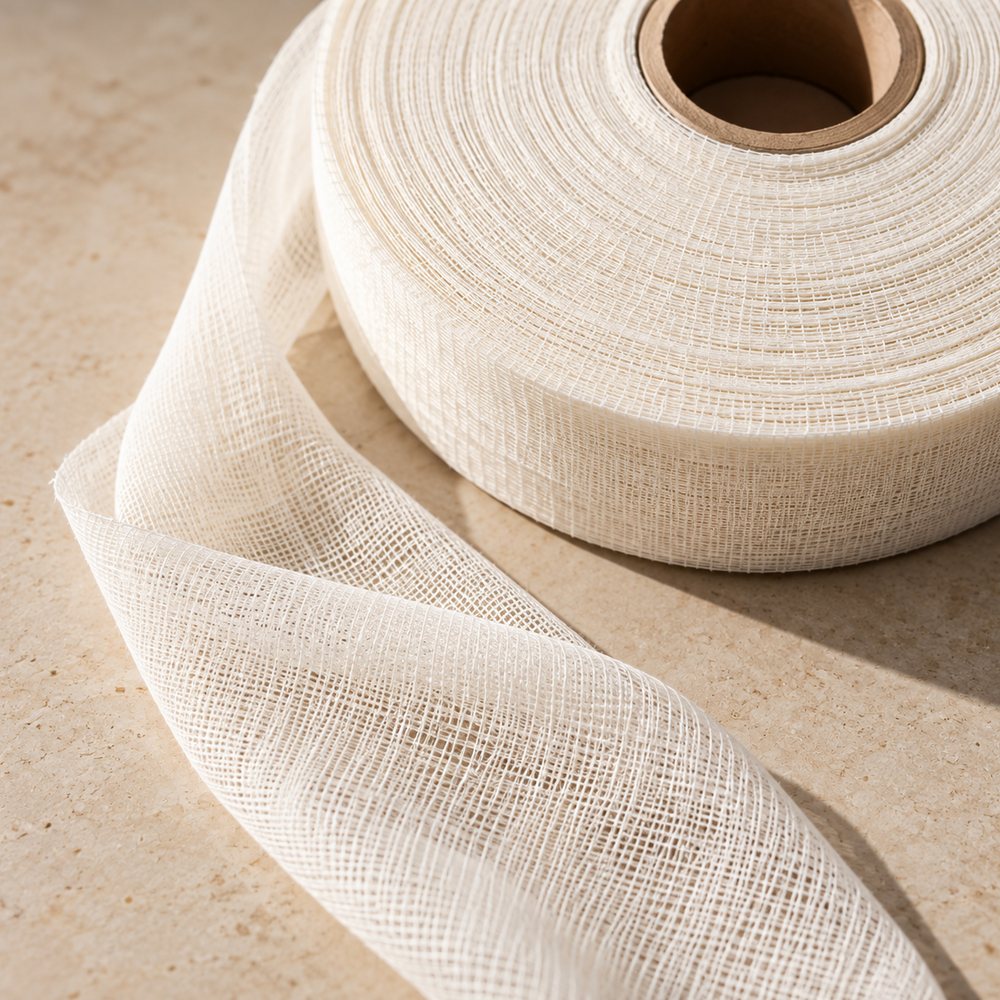
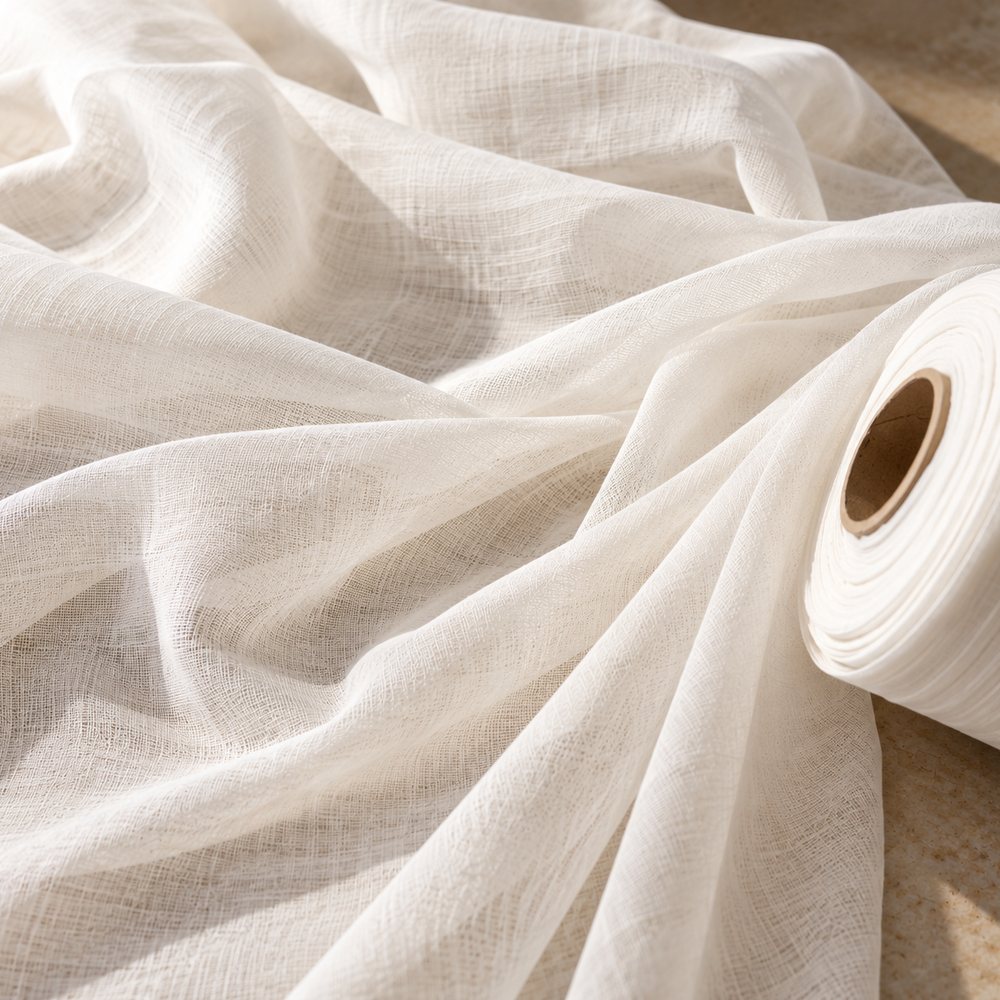
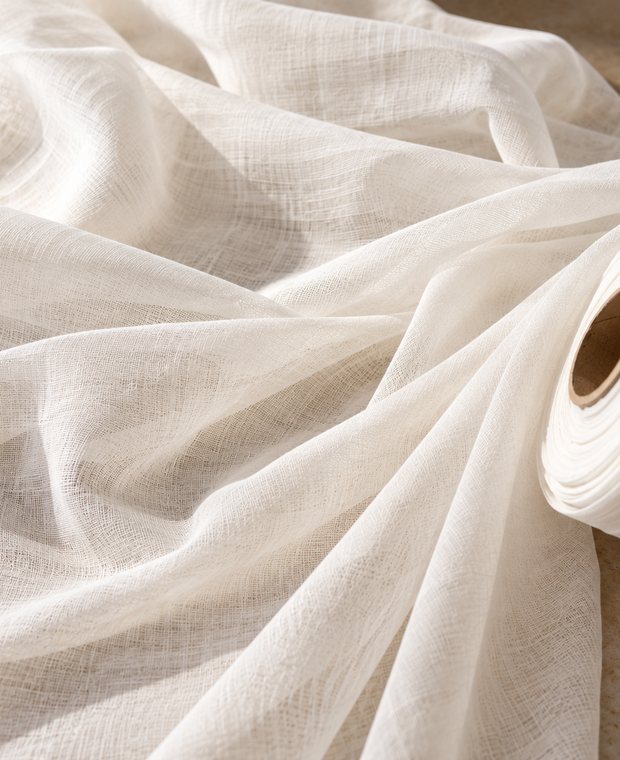
Open weave cotton fabric is a woven cotton with visible gaps between its yarns, so air, light and liquid pass straight through it. The gaps come from spacing fewer threads per centimetre than a normal cloth, or from twisting warp yarns around the weft so an open structure stays in place. Muslin, cheesecloth, gauze, scrim and leno are the open weave cottons buyers meet most often.
Open weaves are simple to look at and easy to get wrong in a specification. The name on an order rarely says how open the cloth is, and that is the property that decides whether it drains, filters, breathes or holds a seam. This guide explains what makes a weave open, the main types, what each is used for and what to write down when you buy.
What makes a weave open
Every woven cloth is a grid of warp yarns (along the length) and weft yarns (across the width). How open that grid is depends on three things.
- Ends and picks per centimetre. Fewer warp ends and weft picks leave larger spaces between them. Our guide to ends and picks in fabric construction explains how these are counted and written.
- Yarn count. Finer yarns cover less of the surface than coarse yarns at the same thread density, so the gaps are larger. See yarn count (Ne) explained for how cotton yarn is graded.
- Weave structure. A plain weave crosses single threads at every point and can be made very open. A leno weave twists two warp yarns around each weft pick, which locks spaced yarns in position.
Weavers describe the result as cover: how much of the surface is covered by yarn and how much is open space. A dense poplin is close to fully covered. A cheesecloth for draining fresh curd may be more open than covered. This is why weight alone is a poor guide. Two open weaves of similar gsm can behave very differently if one uses more, finer yarns and the other fewer, coarser ones.
Types of open weave cotton
The names overlap, and different markets use them loosely. The table shows how the terms are usually understood in the trade.
| Name | Construction | What it is used for |
|---|---|---|
| Muslin | Light, open plain weave in fine yarn | Kitchens, baby textiles, light garments, linings |
| Cheesecloth | Muslin made for food work, often more open | Draining curd, wrapping cheese, straining |
| Gauze | Very open plain or leno weave | Dressings, light layers, swaddles |
| Scrim | Open plain weave, often stiffened | Backing, reinforcing and theatre cloths |
| Leno | Warp yarns twisted in pairs around the weft | Open cloths that must not slip: bags, nets, curtains |
| Voile | Fine, semi-sheer plain weave in tightly twisted yarn | Sheer curtains, summer shirts and blouses |
Muslin is the open weave most of our buyers mean when they ask for one. We cover its history and uses in what is muslin fabric, and the dairy grades, from open to close, in cheesecloth for dairies.
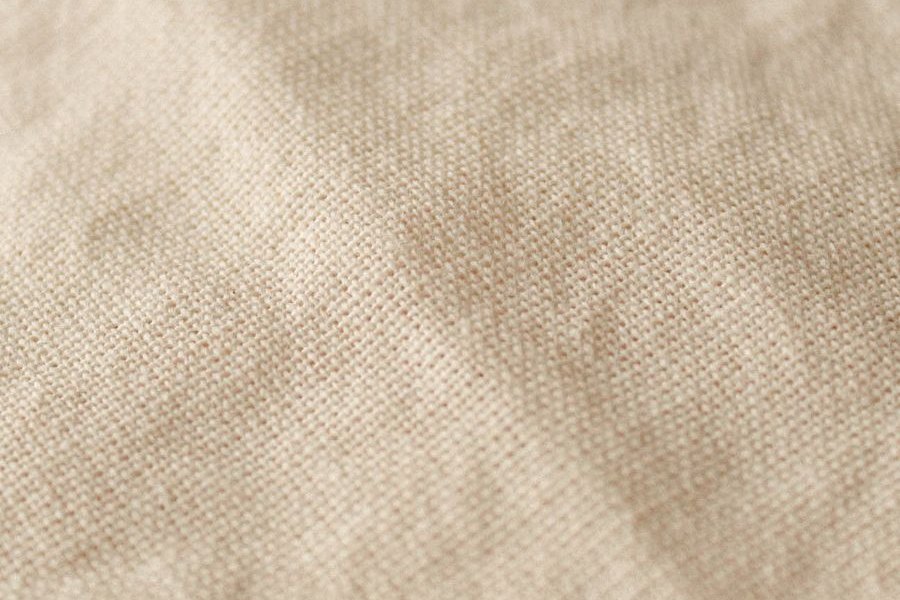
A panama or basket weave is sometimes described as more open than a plain weave, because threads cross in pairs. It is still a closed cloth in practice, built for absorbency and print, not drainage. If that is the cloth you need, what is panama fabric explains it.
What open weave cotton is used for
The open structure does three jobs that a dense cloth cannot: it lets liquid drain, it lets air move, and it stays light and soft.
- Professional kitchens: straining stocks and sauces, wrapping herbs, covering food and making lemon wraps that hold back pips at the table.
- Dairies: draining whey from curd, lining moulds and presses, and wrapping clothbound cheeses while the rind forms.
- Baby textiles: swaddles, burp cloths and blankets that breathe and become softer with washing.
- Garments and home textiles: summer shirts, linings, sheer curtains and throws, where light and air coming through are the point.
- Technical and backing uses: scrims and leno cloths that reinforce, support or protect another material.
For food work the cloth should be 100% cotton, free of unnecessary finishes and certified for direct contact with food. In the EU, Regulation (EC) No 1935/2004 sets the general rules for materials that touch food; ask the supplier which certificate covers the cloth and keep a copy with your own records.
The trade-offs of an open weave
Fewer interlacings mean the cloth has less to hold it together. That is the price of breathability and drainage, and it shows up in four places.
Seam slippage. In an open plain weave, yarns can slide along each other under tension, so a seam pulls open before the thread breaks. Leno and mock leno constructions resist this. For sewn products, ask whether the cloth has been tested for slippage at a seam (ISO 13936 is the usual method for woven fabrics) and use a wider seam allowance than on a dense cotton.
Stability. Open cloth distorts easily when it is cut, spread or hung. Cut pieces skew, and long lengths can bow. Good handling at the mill and a straight finish help; on the cutting table, spread without tension.
Shrinkage. Loose yarns have room to relax and close up in hot water, so open weaves can shrink more than dense cottons. Ask for a figure after a stated washing procedure such as ISO 6330, and size cut pieces from a washed sample. Our guide to shrinkage in cotton fabrics covers why it happens and how it is controlled.
Printing. Print sits on the yarns, not on the gaps, so hairlines and small type break up and some ink passes through the cloth. Bold motifs, solid areas and repeats with some scale print best. Approve a strike-off on the actual cloth before bulk.
How to specify open weave cotton
The name alone does not define the cloth, so put the construction in writing. A complete specification for an open weave cotton covers:
- Fibre: for example 100% cotton.
- Weave: plain, leno or mock leno.
- Ends and picks per centimetre: this sets the openness more than any other figure.
- Yarn count: warp and weft, in Ne or tex.
- Weight: target gsm with an accepted tolerance.
- Width: usable width, which decides how many pieces each metre yields.
- Finish: loomstate, bleached, softened or no finish. For food contact, ask for no unnecessary finishes.
- Shrinkage: the figure you can accept after washing, and the procedure used to measure it.
- Format: by the roll, as folded pieces or cut to size.
If you are replacing a cloth you already use, send a piece of it. Counting ends and picks on a real sample is quicker and more reliable than matching a name.
Our open weave cottons
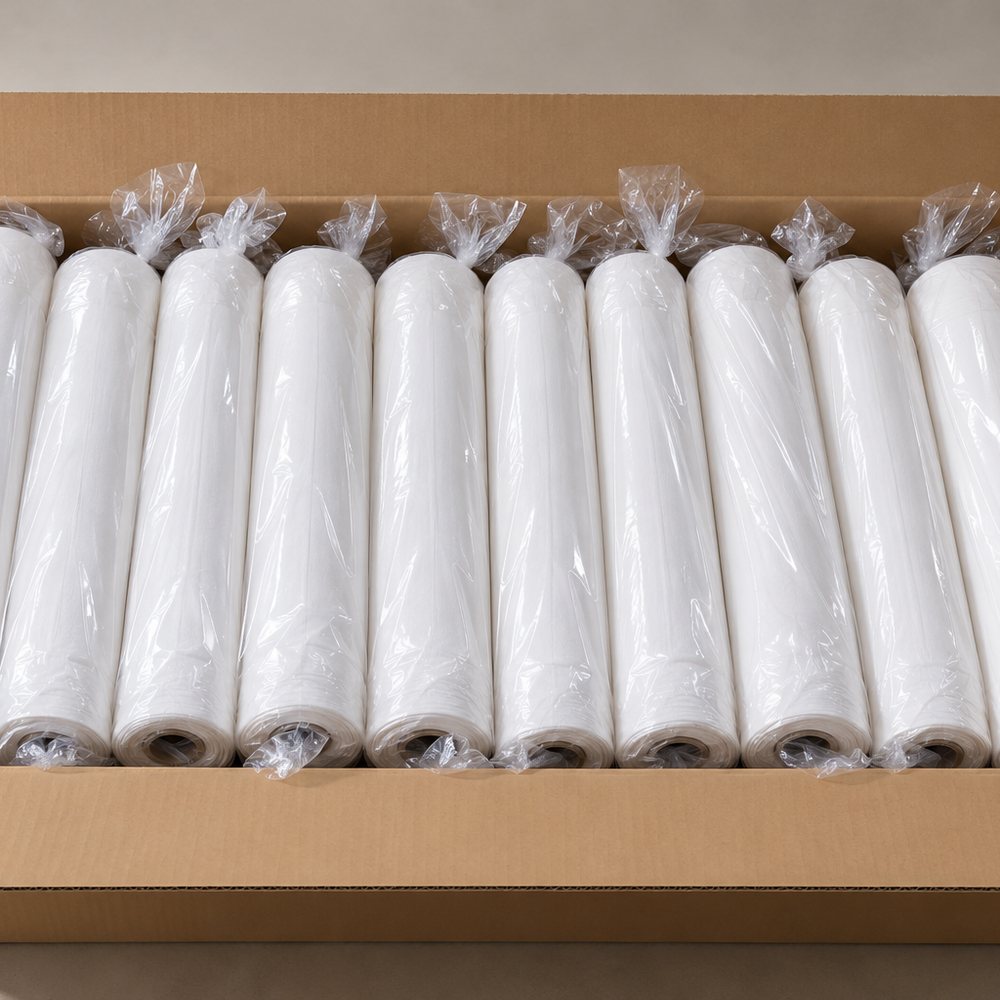
Mekan Textile weaves a fine, open plain weave cotton muslin for professional kitchens, supplied in 10 m and 50 m rolls and folded 50 m pieces, plus cheesecloth cut to order for dairies and muslin lemon wraps for hotels and restaurants. All of them are certified safe for direct contact with food. How the rolls and pieces are packed is explained in muslin rolls and folded pieces, and the range is on our muslin and cheesecloth page.
Tell us what the cloth has to do (strain, drain, wrap, breathe or carry a print), the sizes you cut and the quantity, and we will suggest a construction and send a sample to test.
Common questions
What is open weave cotton fabric called?
It depends on the construction and the use. The most common names are muslin, cheesecloth, gauze, scrim and leno. Muslin and cheesecloth are open plain weaves; leno uses pairs of twisted warp yarns to hold an open structure in place.
What is open weave cotton used for?
Straining and wrapping food in kitchens, draining curd in dairies, lemon wraps, baby swaddles and burp cloths, light summer garments, sheer curtains, and backing or reinforcing cloths. The open structure lets air and liquid pass through quickly.
Is muslin an open weave?
Yes. Muslin is a light plain weave cotton with relatively few, fine yarns per centimetre, which leaves small gaps you can see when you hold it to the light. Cheesecloth is a muslin made for food work, often in a more open construction.
Does open weave cotton shrink?
Yes, and often more than a dense cotton, because the loose yarns have room to relax and close up in hot water. Ask for a shrinkage figure after a stated washing procedure, such as ISO 6330, and size cut pieces from a washed sample.
Can you print on open weave cotton?
Yes, but the gaps break up very fine lines and some ink can pass through the cloth. Bold motifs and solid areas work best. Always approve a printed strike-off on the actual cloth before bulk.