Ends and picks: reading fabric construction numbers
Ends and picks tell you how densely a fabric is woven. Here is how the numbers are written, measured and used to compare two cloths.
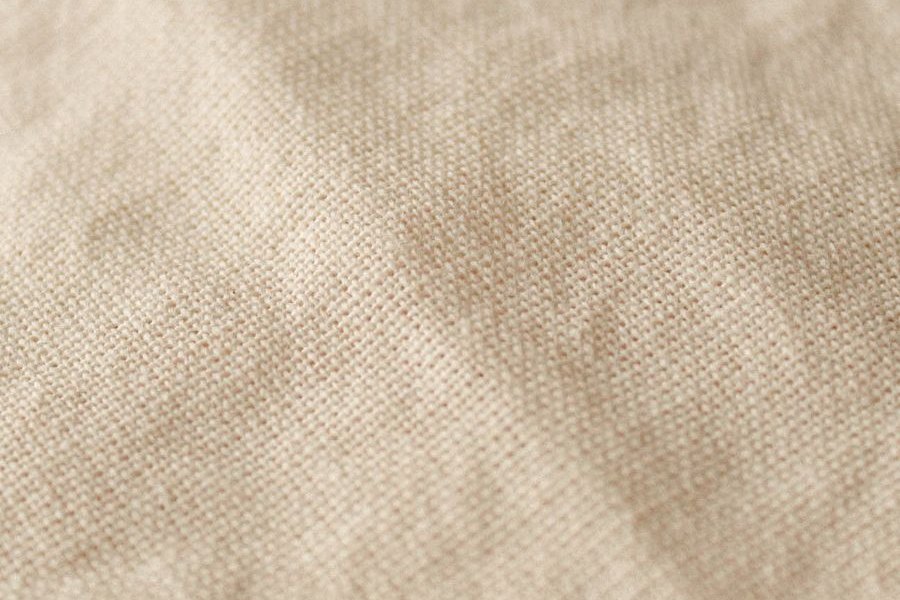
Two cotton fabrics can share the same weight and yarn count and still look and behave differently, because their threads are packed together at different densities. That density is given as ends and picks, and it is one of the most informative lines on a woven fabric specification.
The terms
- Ends are warp threads, the ones running along the length of the fabric. Ends per centimetre (or per inch) is how many sit side by side across one unit of width.
- Picks are weft threads, the ones running across the width. Picks per centimetre (or per inch) is how many are laid in along one unit of length.
The name "pick" comes from the loom: each pass of weft is one pick. Together, ends and picks are the thread density, sometimes loosely called the thread count, although thread count in bedding marketing often adds the two together and can include plied yarns in ways that inflate the figure.
How construction is written
A full construction usually combines yarn counts and densities. Two common layouts are:
- Per inch, with counts: 40 × 40 / 133 × 72. Warp and weft counts (here Ne 40 in both), then ends and picks per inch.
- Per centimetre: 52 × 28 threads/cm, often with the counts given separately.
To convert, divide per inch by 2.54 to get per centimetre, or multiply per centimetre by 2.54 to get per inch. The example above is roughly 52 ends and 28 picks per centimetre.
Grey and finished density
Density is set on the loom, but it changes through finishing. Fabric usually shrinks in width during wet processing, packing the ends closer, and may shrink or stretch in length, which changes the picks. A grey fabric of 48 ends per centimetre may finish at over 50. Always check whether a figure refers to grey (loom state) or finished fabric. For a buyer, the finished figure is the one that matters.
How it is measured
Thread density is counted over a known distance with a pick glass (a small folding magnifier with a measured window) or a counting instrument, at several places across the fabric and away from the selvedges. ISO 7211-2 describes a standard method. On a dense or fine fabric, counting over at least a few centimetres and averaging gives a more reliable result than counting a single centimetre.
What the numbers tell you
With the yarn count, thread density lets you predict much of a fabric's behaviour:
| Construction feature | Usual effect |
|---|---|
| High ends and picks with fine yarn | Smooth, dense surface, good for printing detail, lower air permeability |
| Low ends and picks | Open, light, breathable, more likely to slip at seams |
| Many more ends than picks | Fine horizontal ribs, as in poplin, and a crisp handle |
| Balanced ends and picks | Similar behaviour in both directions |
| Coarse plied yarns, moderate density | Heavy, strong cloth, as in canvas |
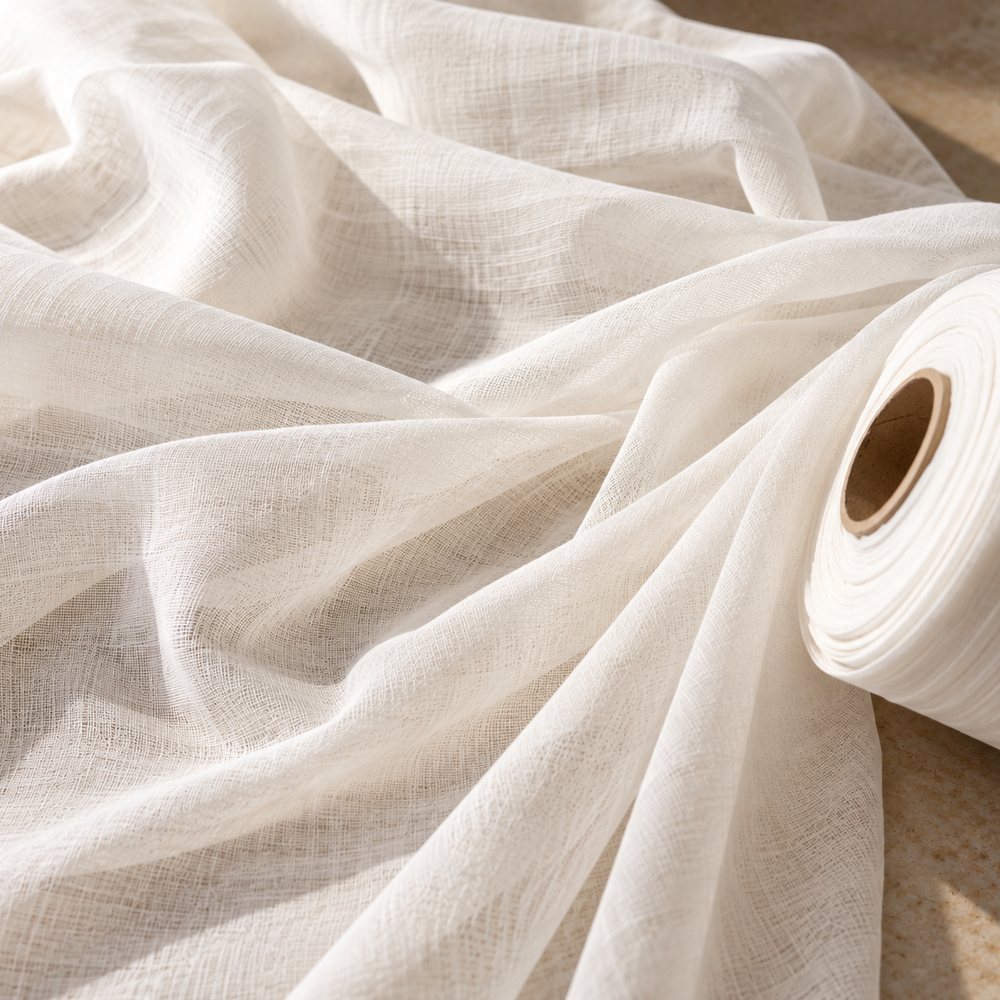
An open plain weave with low density, such as the cloth used for muslin and cheesecloth, strains liquids and breathes freely. A tightly packed poplin blocks more light and gives a smooth base for print. Both can be 100% cotton plain weaves; density and yarn make the difference.
Density alone does not say how much of the surface is covered by yarn, because a thick yarn at low density can cover as much as a fine yarn at high density. Cover factor combines the two into a single figure describing how closely the yarns fill the area. It is mainly an engineering tool, but it explains why a heavy canvas with relatively few threads per centimetre can still be very closed and wind-resistant.
Using construction in practice
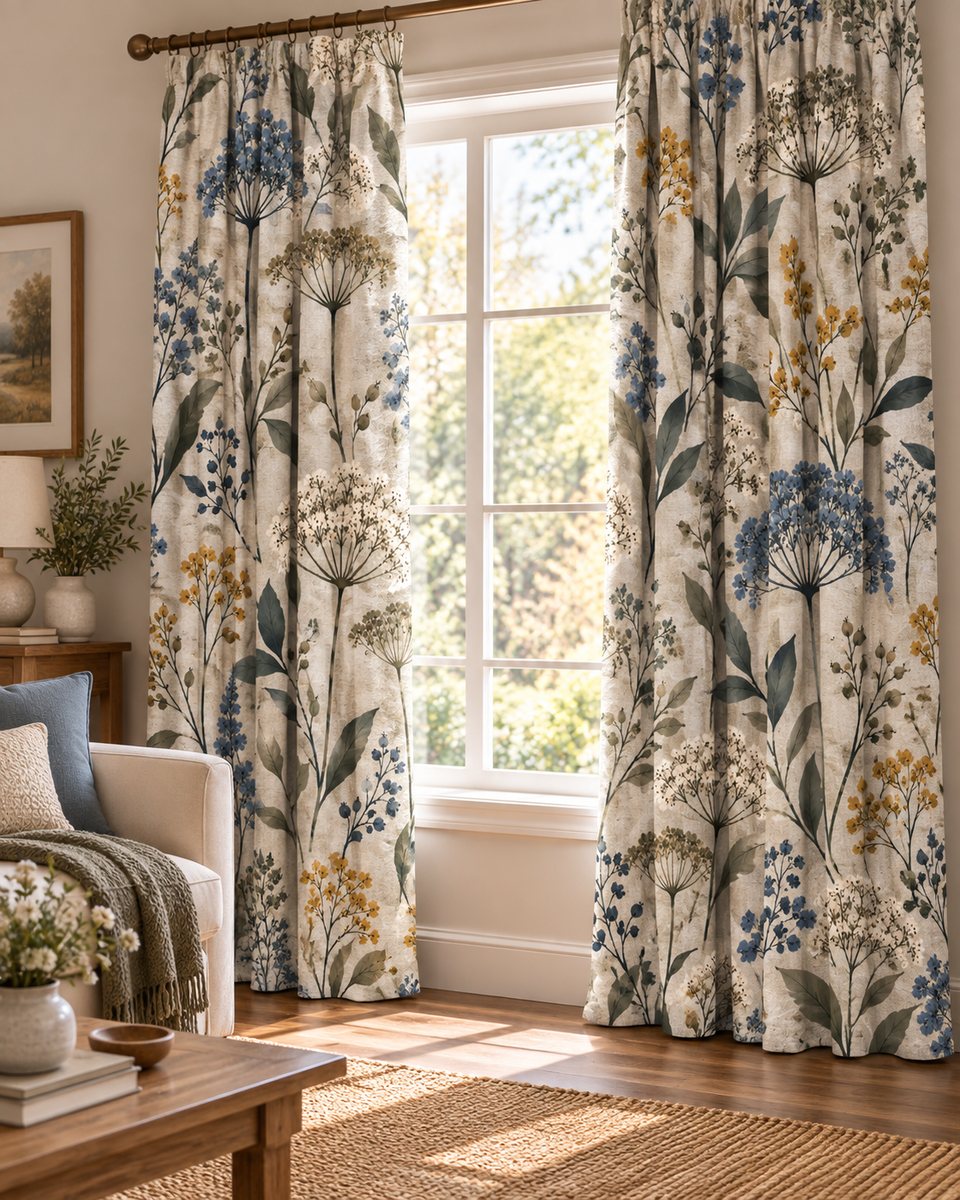
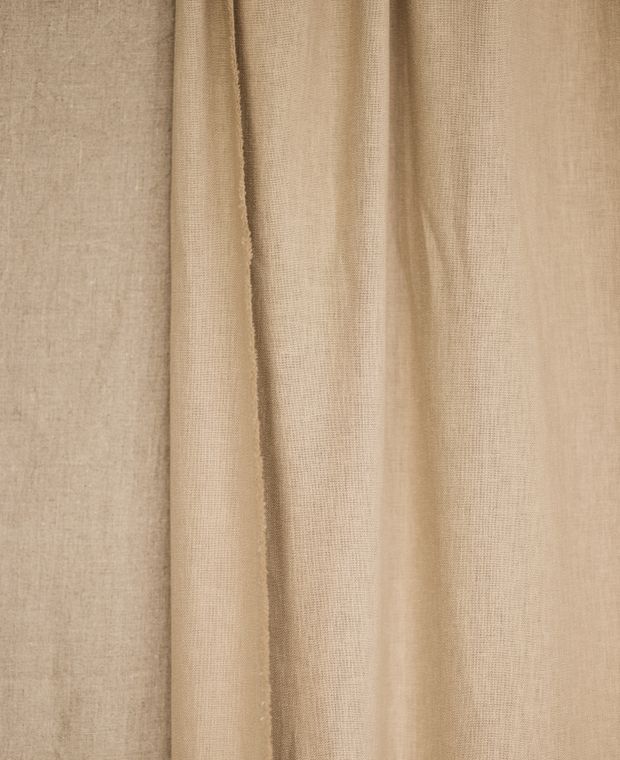
When comparing quotes for what looks like the same fabric, ask for weight, yarn counts and finished ends and picks. If two suppliers quote the same gsm but very different densities, the fabrics will not behave the same. When matching a reference, send a physical sample so the construction can be measured directly. For our standard qualities, weights and compositions are on each product page; our curtain fabrics are a good example of how density changes drape and light at similar weights. For construction details on a specific code, ask us.