Why reactive prints are steamed and washed, and what if you rush it
The printer puts the colour on the cloth. Steaming and washing decide whether it stays there. Here is what each step does, and what goes wrong when they are cut short.
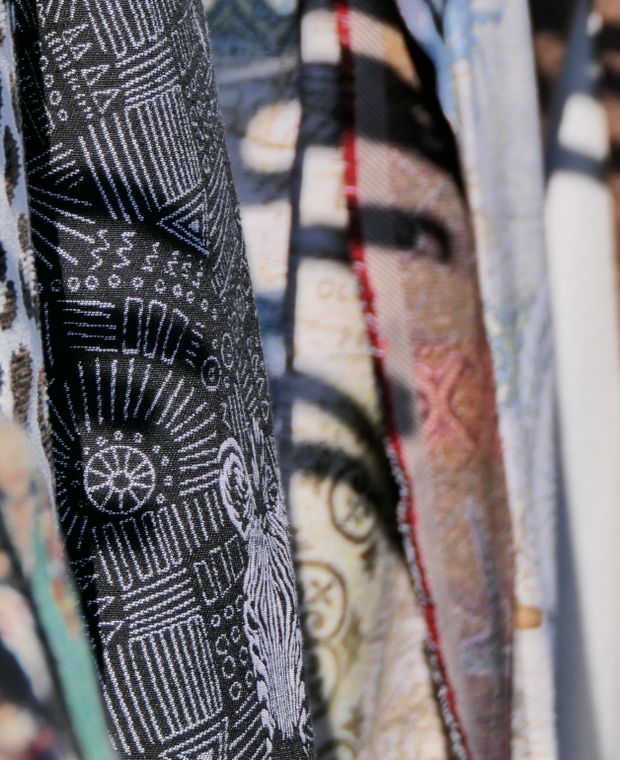
A reactive print comes off the printer looking finished, and it is tempting to think that the job is done. It is not. At that stage the dye is sitting in a layer of pretreatment on the surface of the cotton, and very little of it is attached to the fibre. Steaming fixes the colour and washing removes everything that did not fix. Both steps take time, and both are where a pressured schedule can do lasting damage to the fabric.
What steaming does
Reactive dyes carry a reactive group that can form a covalent bond with the hydroxyl groups in cellulose. For that reaction to happen, the dye has to move from the surface into the swollen fibre, and the conditions have to be alkaline, hot and moist. Steaming provides all three. Saturated steam condenses on the cloth, the pretreatment layer takes up water, the dye diffuses into the fibre and the alkali in the pretreatment activates the bond.
At the same time, some dye reacts with water instead of with cellulose. That hydrolysed dye can no longer bond, and it stays loose in the fabric.
What happens if steaming is rushed
- Weak, flat colour. Too short a time or too low a temperature leaves part of the dye unfixed. It washes out, and the shade comes out lighter and duller than the approved strike-off.
- Shade variation. Uneven steaming, for example a steamer loaded too fast, fixes one part of the roll more than another. The result is a roll that is darker at one end or one side.
- Poor fastness. A print that was underfixed keeps losing colour in later washes, well after it has left the factory.
- Bleeding when overdone. Too wet a steam can make colours spread along the edges of the design, blurring fine lines.
What washing off does
After steaming, the fabric contains fixed dye, unfixed and hydrolysed dye, thickener, alkali, urea and salts. Washing off removes all of it except the fixed dye. A typical sequence is a cold rinse to remove thickener and chemicals, a hot rinse, one or more soaping baths near the boil to strip unfixed dye, then warm and cold rinses to finish. The fabric may also be neutralised.
The order matters. If the first bath is too hot while the fabric is still full of loose dye, that dye can redeposit onto the white areas of the design before it is carried away.
What happens if washing is rushed
- Stained whites. Loose dye settles on the unprinted ground, giving whites and pale areas a tint, often pink or blue.
- Bleeding in the first home wash. Dye that was not washed off at the mill comes off in the customer's washing machine and can stain other items.
- Low wet rubbing and wash results. Laboratory fastness tests pick up unfixed dye quickly, and a batch can fail its report.
- Stiff or harsh hand. Thickener left in the cloth makes it feel papery, which defeats one of the main reasons for choosing reactive.
Why the steps cannot be skipped
Pigment printing avoids steaming and washing altogether because the pigment is held by a binder that is cured with dry heat. That is its great advantage in speed. Reactive printing trades that speed for a result the binder cannot give: colour that is part of the fibre, a completely soft hand and very good wash fastness. Those qualities only appear if the fixing and washing are done fully.
For a buyer, the practical point is that reactive lead times include these steps, and that a strike-off should always be judged after fixing and washing, never straight off the printer. You can read more on our reactive digital printing page, or compare it with pigment digital printing if speed is the priority. Ask us which route suits your product.