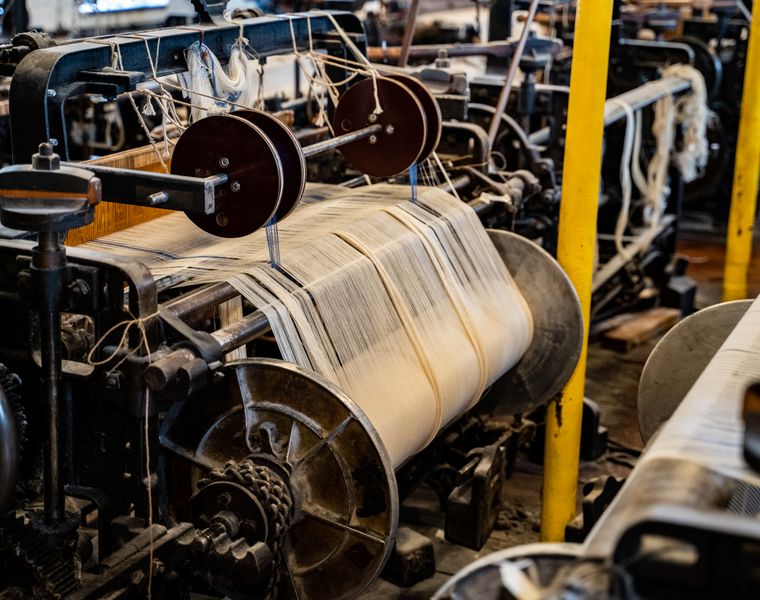
What is muslin fabric? Weave, weight and where it is used
Muslin is one of the simplest cloths a mill can weave, and one of the most useful. Here is what defines it and why so many trades rely on it.
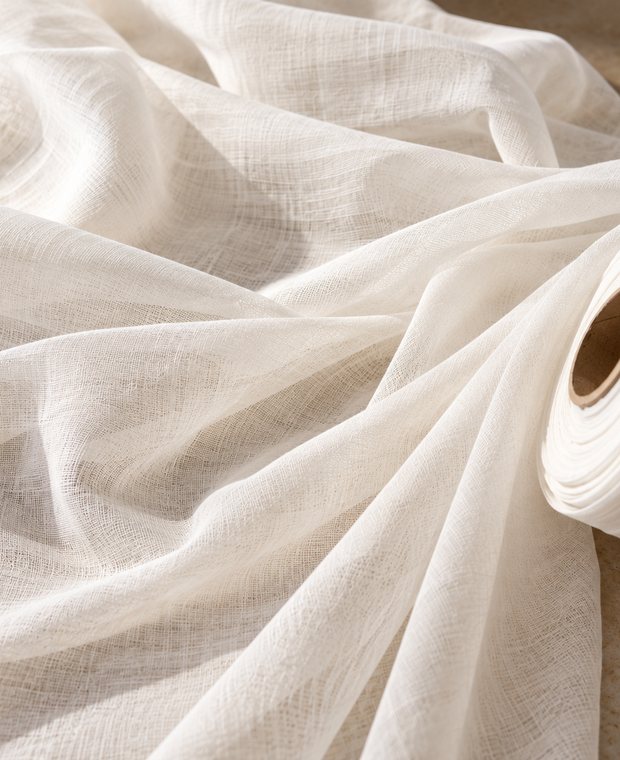
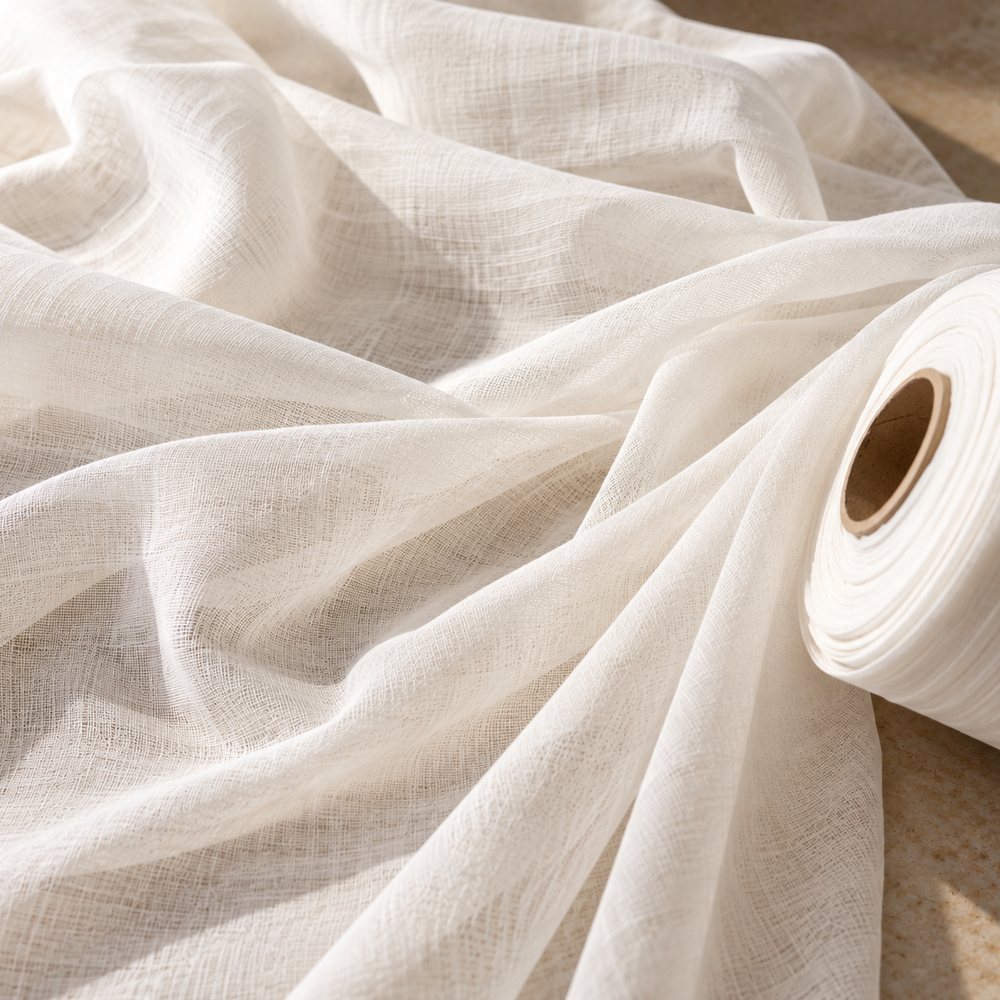
Muslin is a light, loosely woven cotton cloth. The name is usually traced to Mosul, the trading city through which fine cotton cloth once reached Europe, and over the centuries it has been used for everything from dresses to dairy work. Today the word covers a family of fabrics that share one idea: a simple, open plain weave in fine cotton yarn, soft to the touch and easy for air and liquid to pass through.
The weave
Muslin is a plain weave: each weft yarn passes over one warp yarn and under the next, and the next weft does the opposite. It is the most basic structure a loom can make, and the same structure used for poplin and canvas. What makes muslin different is not the pattern but the spacing. The yarns are fine and there are relatively few of them per centimetre, so small square gaps remain between them. Hold a piece of muslin to the light and you can see through it.
That open construction gives muslin its three defining qualities:
- Breathability: air moves freely through the gaps, so the cloth stays cool against the skin and dries quickly.
- Drainage: liquid passes through while solids stay behind, which is why kitchens and dairies use it to strain.
- Softness: fine yarns and a loose structure make a cloth that drapes and crumples easily and becomes softer with washing.
How heavy is muslin?
Muslin is among the lightest woven cottons in regular use. Most muslins sit well below the weight of a shirting fabric, and the most open grades weigh only a few tens of grams per square metre. Weight is measured in the usual way, by cutting and weighing a sample of known area (ISO 3801 describes the method for woven fabrics), but with muslin the thread count and the size of the openings often tell a buyer more than the gsm figure does. Two muslins of similar weight can behave quite differently if one uses more, finer yarns and the other fewer, coarser ones.
Where muslin is used
| Use | What the cloth does |
|---|---|
| Professional kitchens | Straining stocks and sauces, wrapping herbs and spices, covering food, plating |
| Dairies | Draining curd and shaping or wrapping cheese (the cloth is then called cheesecloth) |
| Hotels and restaurants | Lemon wraps at the table, which hold back pips and pulp |
| Baby textiles | Swaddles, burp cloths and blankets that breathe and wash well |
| Fashion and home textiles | Light garments, linings, sheer curtains and throws |
| Promotional products | Small pouches and wraps that carry a brand in a natural material |
Muslin, cheesecloth and gauze
The three words overlap and are often used loosely. In practice, cheesecloth usually means a muslin sold for food work, often graded by how open it is, and gauze is used for very open cloths, including medical dressings. The underlying fabric is the same family: a light, open plain-weave cotton. When you buy, ask for the construction and the intended use rather than relying on the name alone.
What to check when buying
- Composition: 100% cotton is the norm for food and baby use, because it is absorbent, washable and heat tolerant.
- Openness: fine for straining sauces and wrapping lemons, more open for draining fresh curd.
- Finish: for food contact, the cloth should be free of unnecessary finishes and certified for its use.
- Format: by the roll, as folded pieces or cut to size, depending on how it will be used.
Our muslin
Mekan Textile weaves a fine, open plain-weave cotton muslin for professional kitchens, cheesecloth for dairies and lemon wraps for hotels and restaurants, all certified safe for direct contact with food. You can see the range, and how it is packed, on our muslin and cheesecloth page. For muslin for baby, fashion or home textiles, tell us the product and we will suggest a construction.