Storing fabric rolls: light, humidity, handling and stock rotation
A roll of fabric can be spoiled in storage long before it reaches the cutting table. Light, damp, weight and poor rotation are the usual causes.
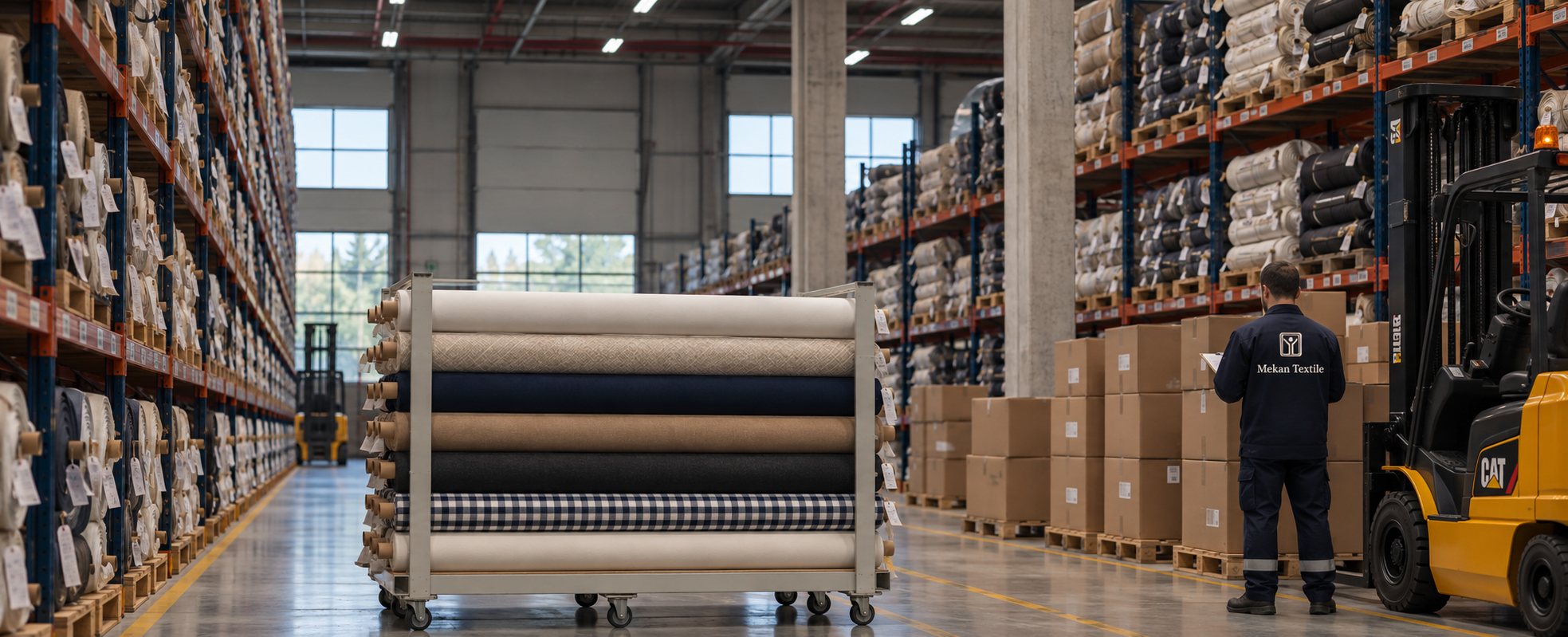
Fabric leaves the mill inspected, wrapped and labelled, but it may then sit in a warehouse or a workroom for weeks or months before it is cut. How it is stored in that time decides whether it arrives at the cutting table in the same condition. The risks are simple and well understood: light, moisture, weight and time.
Light
Daylight and fluorescent light both contain ultraviolet, which fades dyes over time. On a roll, only the outer wrap and the exposed ends are lit, so fading shows as a band of paler colour on the outside layer or along one selvedge. It often goes unnoticed until the fabric is cut and panels from the outer and inner wraps are sewn side by side.
- Keep rolls out of direct sunlight, away from windows and skylights.
- Leave rolls in their wrapping until they are needed.
- Use opaque covers for open stock on shelves.
Humidity and temperature
Cotton is hygroscopic: it takes up and gives off moisture with the surrounding air. A steady, moderate environment, roughly 15-25 °C and 50-65% relative humidity, keeps it stable. Problems start at the extremes.
- Too damp. Above about 70% relative humidity for long periods, mildew can develop, especially on the inner wraps and near cardboard tubes. Mildew leaves spots and smells that do not always wash out.
- Condensation. Moving cold rolls into a warm room, or storing them against a cold outside wall, can cause condensation inside the wrapping.
- Too dry. Very dry air makes cotton slightly lighter and stiffer, and fabric cut in very dry conditions may relax and grow a little once it takes up moisture again.
Keep rolls off the floor on pallets or racks, and away from concrete walls, which hold moisture.
Stacking and handling
Rolls stored in tall stacks crush the rolls beneath them. The weight flattens the roll and presses the fold of each wrap into a hard crease or shiny mark, which can be very difficult to remove from heavy fabrics such as canvas.
- Store rolls horizontally on racks with support along their length, or suspended by the core on bars.
- If rolls must be stacked, keep stacks low and place the heaviest at the bottom.
- Do not stand long rolls on end for long periods; the bottom edge crushes.
- Lift by the core or with both hands along the roll, never by dragging the outer wrap.
- Keep blades, pallets and forklift forks away from the fabric face.
Wrapping and yellowing
Polyethylene film keeps out dust and moisture, but whites and pale shades can develop a yellow cast in storage. One known cause is phenolic yellowing, where antioxidants in some packaging materials react with nitrogen oxides in the air, for example from gas heaters or forklift exhaust. Good ventilation, electric equipment in storage areas and packaging free of these antioxidants reduce the risk.
Labels, dye lots and rotation
Every roll should carry its fabric code, colour, length and batch or dye lot. Different lots of the same colour can differ slightly in shade, so pieces from different lots should not be cut into the same product or placed next to each other in a set. Keep lots together and record which lot each cut order used.
Rotate stock first in, first out, so that older rolls are used before newer ones. Fabric does not spoil quickly in good conditions, but the longer it waits, the more likely it is to meet light, damp or crushing along the way.
Before cutting
Unroll fabric and let it relax for some hours before cutting, particularly stretch blends, which are wound under tension. Check the outer wrap and the ends for fading or marks, and cut from the inner wraps if in doubt.
If you are planning stock of our cotton canvas, curtain fabrics or any other quality, we can advise on roll lengths and packing through our contact page.