Yarn-dyed vs printed stripes: how to tell and when to choose
A stripe can be woven from coloured yarns or printed onto white cloth. The two can look alike on the roll but behave differently in cost, flexibility and wear.
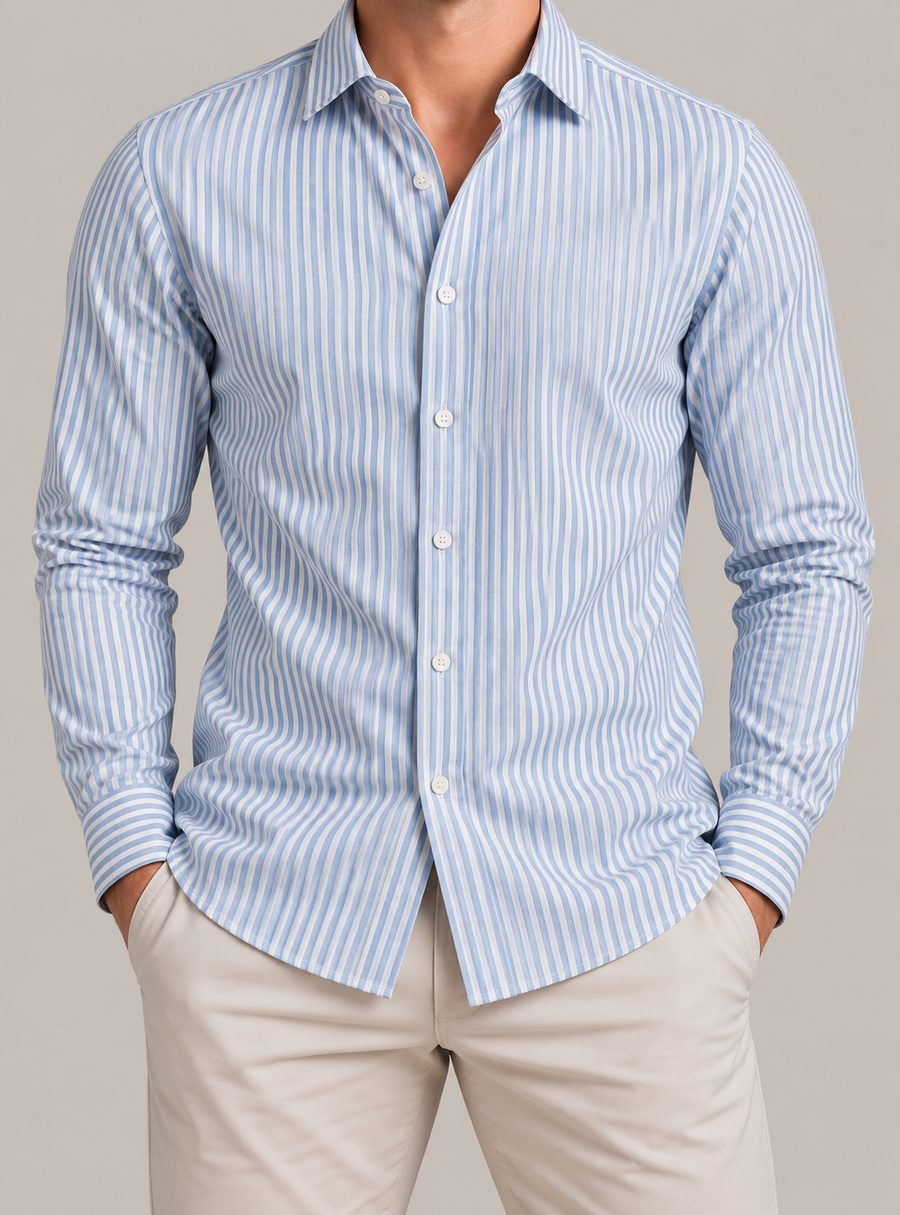
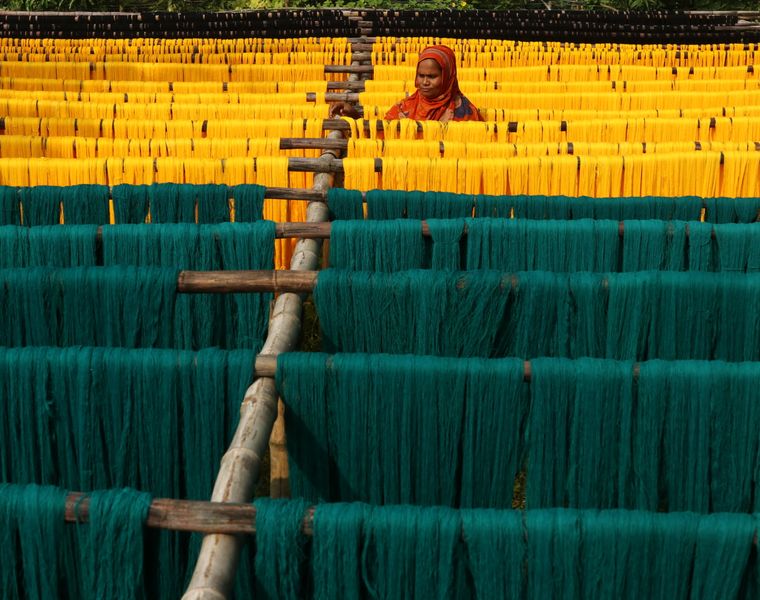
Stripes are among the oldest and most reliable patterns in cotton, used on shirts, tea towels, aprons and table linen. They reach the cloth in two quite different ways. In a yarn-dyed stripe, the yarns are dyed before weaving and the stripe is built by arranging coloured yarns in the warp or weft. In a printed stripe, a white or dyed fabric is woven first and the stripe is printed onto its surface. Both can look excellent. Knowing which is which helps a buyer judge a sample and choose the right route for a product.
How to tell them apart
- Turn it over. A yarn-dyed stripe is equally strong on both sides, because the colour runs through every yarn. A printed stripe is usually paler on the back. Reactive dye on a light poplin can penetrate well, but the back is still slightly softer in colour, and a pigment print shows much less on the reverse.
- Pull a thread. Unravel a yarn from a cut edge. In a yarn-dyed fabric it is one colour all the way through. In a printed fabric the yarn changes colour along its length, and its core may be lighter than its surface.
- Look at the edge of the stripe. In a woven stripe the boundary follows the yarns exactly, so under a magnifier it has a small stepped edge, one yarn wide. A printed stripe edge crosses the yarns and can be slightly soft or, on fine prints, sharper than a single yarn.
- Check the grain. A woven stripe is always perfectly on grain. A printed stripe follows the print, so if the cloth was skewed when printed, the stripe can drift slightly off the weave.
- Look for mixed colours. Where a coloured warp crosses a coloured weft, as in a check or a chambray stripe, the colours blend at every crossing. Printing can imitate this, but a woven blend has a depth that is hard to copy.
Where yarn-dyed stripes are the right choice
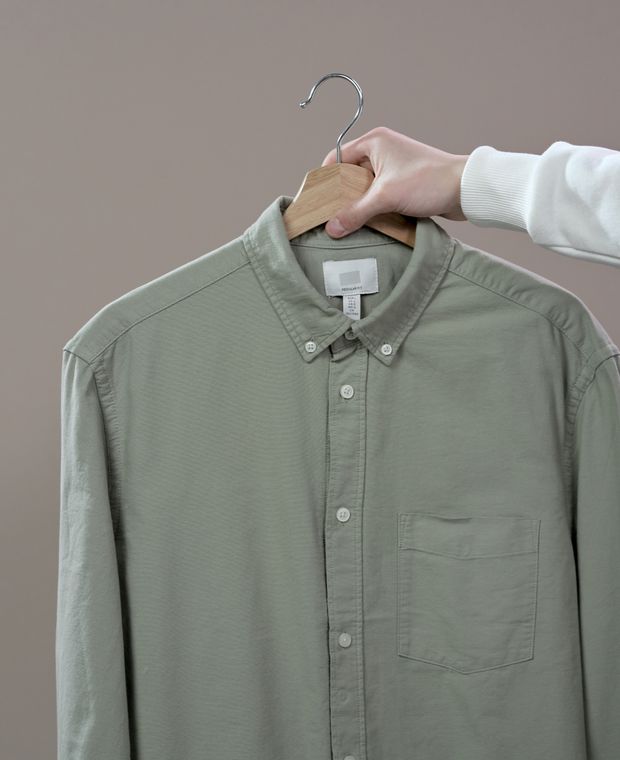
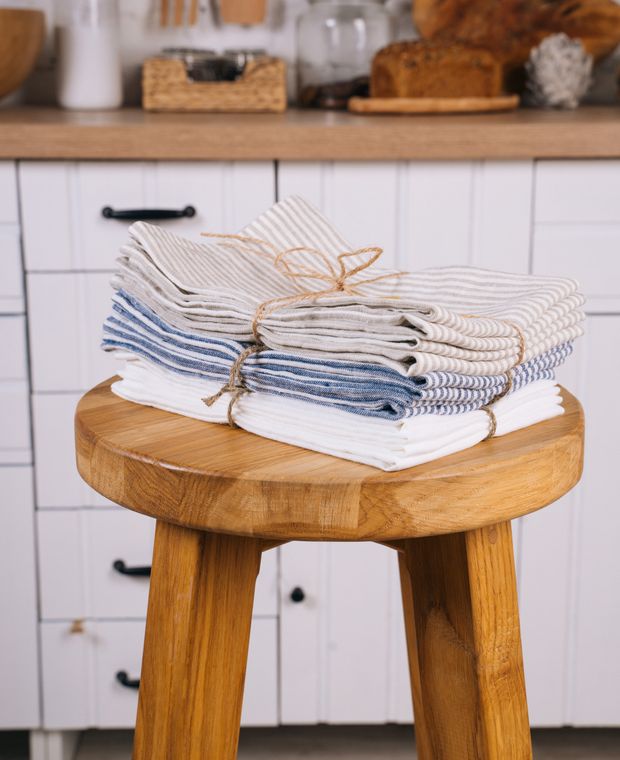
Yarn-dyed stripes are the classic for shirting and for traditional tea towels. The colour is in the yarn, so the fabric is fully reversible, which matters for anything that shows its back, such as a rolled cuff, a turned collar or a tea towel hanging over a rail. The stripe cannot drift off grain, fine pinstripes stay crisp at yarn level, and the colour usually holds up very well through repeated washing.
The limits are commercial. A yarn-dyed stripe needs dyed yarns and a warp set up for that stripe sequence, so minimums per colourway are higher and new colourways take longer. Stripes must follow the warp or weft; a curve or a diagonal is not possible.
Where printed stripes are the right choice
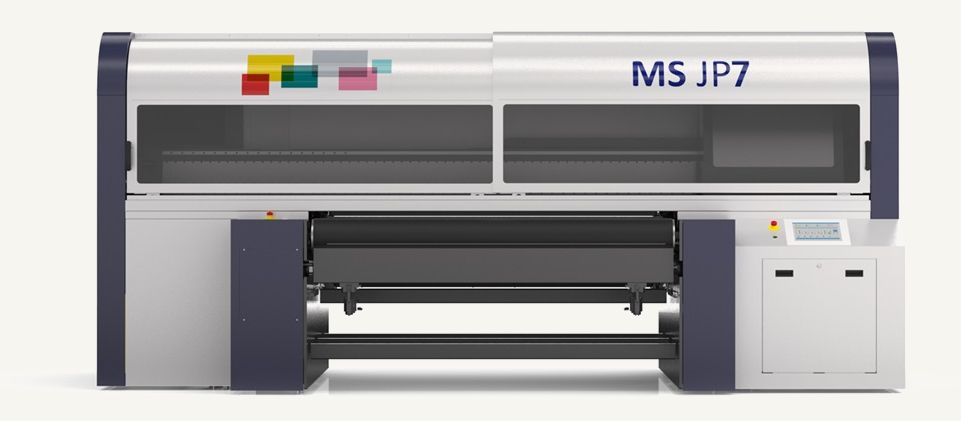
Printing makes stripes flexible. With digital printing there is no warp to set up, so short runs and many colourways are practical, and a stripe can be combined with motifs, text, gradients or borders in one design. Stripes can run at any angle, change width along the cloth, or be engineered to a product, such as a tea towel with a stripe placed exactly at each end. Reactive printing keeps the hand soft and the colour deep; pigment printing is faster and suits sampling and volume via rotary screens.
The trade-offs are a lighter back, the need to keep the fabric straight during printing so the stripe stays on grain, and a slightly different character from a woven stripe when seen close up.
A quick comparison
| Yarn-dyed | Printed | |
|---|---|---|
| Back of the cloth | Same as the face | Paler |
| Stripe direction | Warp or weft only | Any angle or shape |
| New colourway | New yarns and warp | New file |
| Short runs | Limited by warp length | Practical |
| Typical use | Shirting, classic tea towels | Designed home textiles, placement stripes |
Deciding for your product
Choose yarn-dyed when the stripe is the product, the cloth is seen from both sides and the range is stable. Choose printed when you need speed, many colourways or a stripe that works with other design elements. Our shirting range includes plain, striped and check qualities, and our tea towel fabrics can be printed with stripes to your layout. Send us the stripe and the product, and we will suggest a route.