Colour bleeding in cotton: why it happens and how to prevent it
Colour that runs in the wash is almost always dye that never properly bonded to the fibre. Here is where it comes from and how it is kept in the cloth.
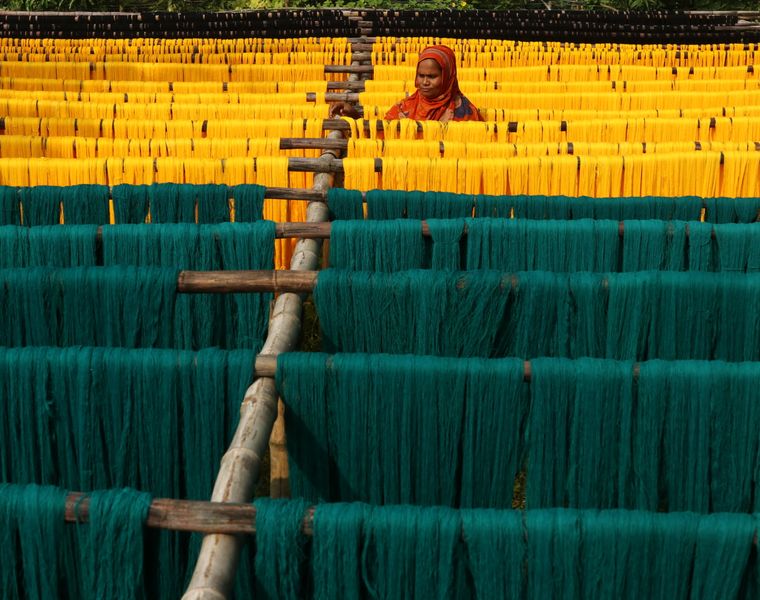
A red tea towel that turns the rest of the wash pink is a classic complaint, and it is usually avoidable. Colour bleeding is not random: it comes from dye that is sitting in the fabric without being fixed to it, and it is released when water, heat and movement give it the chance.
Where loose dye comes from
Cotton is mostly dyed and printed with reactive dyes, which form a chemical bond with the cellulose. The reaction never uses every molecule of dye. Some dye reacts with water instead of the fibre (this is called hydrolysis), and some simply sits on the surface. None of that dye is bonded, so it must be washed out at the mill.
If the washing-off stage is too short, too cool or uses too little water, unfixed dye remains in the cloth. It then comes out in the customer's first washes. The same applies to direct dyes, which are cheaper and simpler to apply but attach to cotton only weakly and bleed far more easily.
Which colours are most at risk
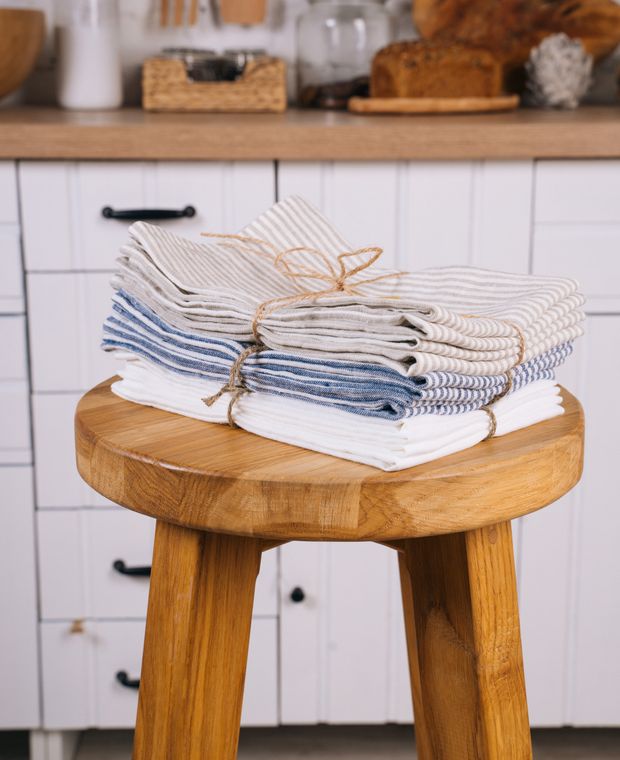
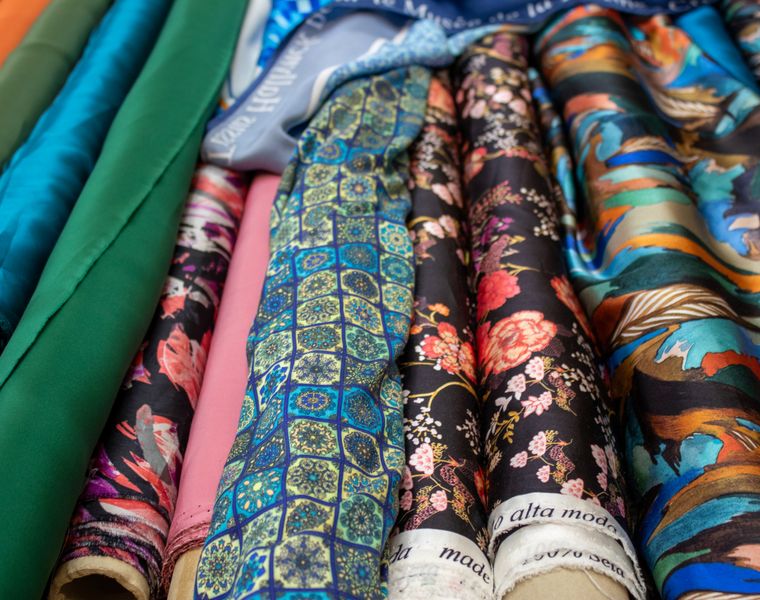
Deep shades carry the most dye, so they carry the most unfixed dye. Dark reds, navies, blacks, deep greens and bright turquoise are the usual suspects. Pale shades bleed very little because there is little dye to lose. A design that places a saturated colour beside white, such as a red stripe on a white tea towel or a navy print on an ecru ground, shows any bleeding immediately.
What the mill controls
- Thorough wash-off. Several hot rinses and a soaping bath remove hydrolysed dye. This is the single most important step, for piece dyeing and reactive printing alike.
- Correct fixation. Temperature, alkali and time, or steaming conditions for prints, must be right so that as much dye as possible bonds.
- Choice of dye. Reactive dyes with good wet fastness are chosen over direct dyes where bleeding matters.
- Aftertreatment. A cationic fixative can reduce bleeding further on deep shades, but it can dull the shade slightly and lower light fastness, so it is a tool, not a substitute for proper washing.
Pigment printing works differently. Pigments do not dissolve in water, so there is no loose dye to bleed in the usual sense. The risk with pigment is rubbing, where colour transfers by friction, which is controlled by the binder and curing.
How to check before bulk
Wash fastness is tested under ISO 105-C06, where the sample is washed together with a multifibre strip and the staining of each fibre is graded from 1 to 5. Wet rubbing (ISO 105-X12) and perspiration fastness are worth adding for products that stay damp or touch the skin. A simple practical check is also useful: wash a sample with a white cotton cloth at the temperature the care label will state, then leave the two damp and folded together for an hour. Staining that appears in that hour is the kind customers will see.
What the end user can do
- Wash deep-coloured items separately for the first few washes.
- Use the temperature on the care label rather than a hotter wash.
- Do not leave wet coloured items in a pile or in the drum, since contact staining happens most while fabrics sit damp together.
- Avoid long soaks in hot water with strong detergent.
These points belong on the care label or swing ticket of any deeply coloured product.
Planning a colourway
When a design pairs dark and white, specify the fastness you need at the start and ask for test results on the strike-off. For reactive work, see our reactive digital printing page; for designs where bleeding is a particular worry, pigment printing may suit. We are happy to talk through shade and fastness requirements via our contact page.