Why double-ply yarns make a stronger canvas
Two canvases can weigh the same and still perform very differently. The yarn is usually the reason. Here is what plying does and why it matters for heavy cotton.
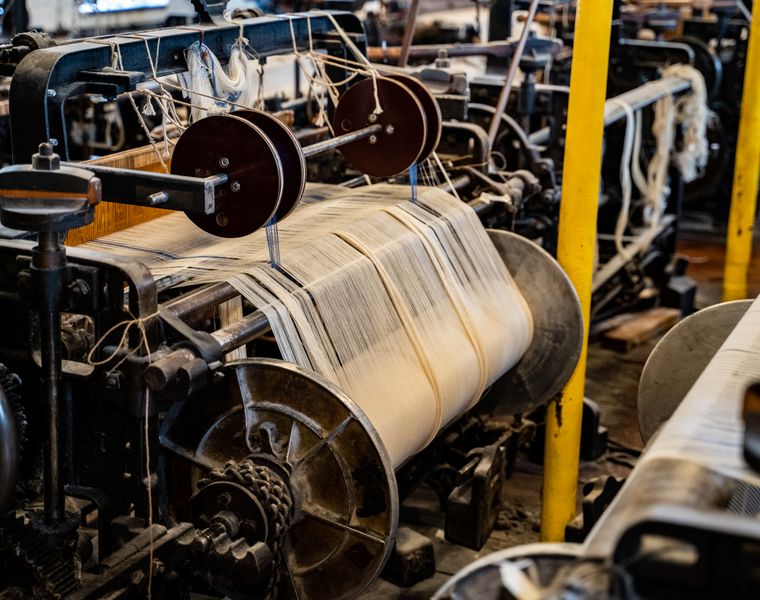
When buyers compare canvas, they usually start with weight. Weight matters, but it does not tell the whole story. Two cotton canvases at 500 gsm can differ a great deal in strength, stiffness and how they wear, and much of that difference comes from one line on the spec sheet: whether the yarns are single or plied.
Single and plied yarns
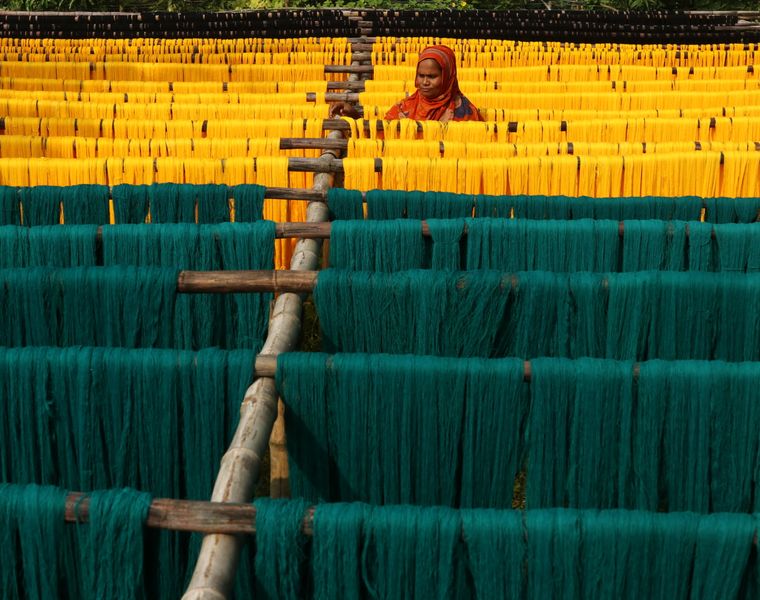
A single yarn is made by drawing out cotton fibres and twisting them so they grip each other. A plied yarn is made by taking two (or more) of those singles and twisting them together. A two-ply or double-ply yarn is written with a slash in the count, for example Ne 10/2: two strands of Ne 10 twisted together, giving a yarn of roughly the same thickness as a single Ne 5.
The ply twist normally runs in the opposite direction to the twist in the singles. That opposing twist balances the yarn, so it lies flat and does not try to untwist itself.
What plying changes
- Strength: no single yarn is perfectly even. It has thin places, and a yarn breaks at its weakest point. When two singles are plied, a thin place in one strand is very unlikely to meet a thin place in the other, so the plied yarn is stronger and more consistent than a single of the same total thickness.
- Abrasion resistance: the plied yarn is rounder and more compact, with fewer loose fibre ends on the surface. It resists rubbing better and pills less.
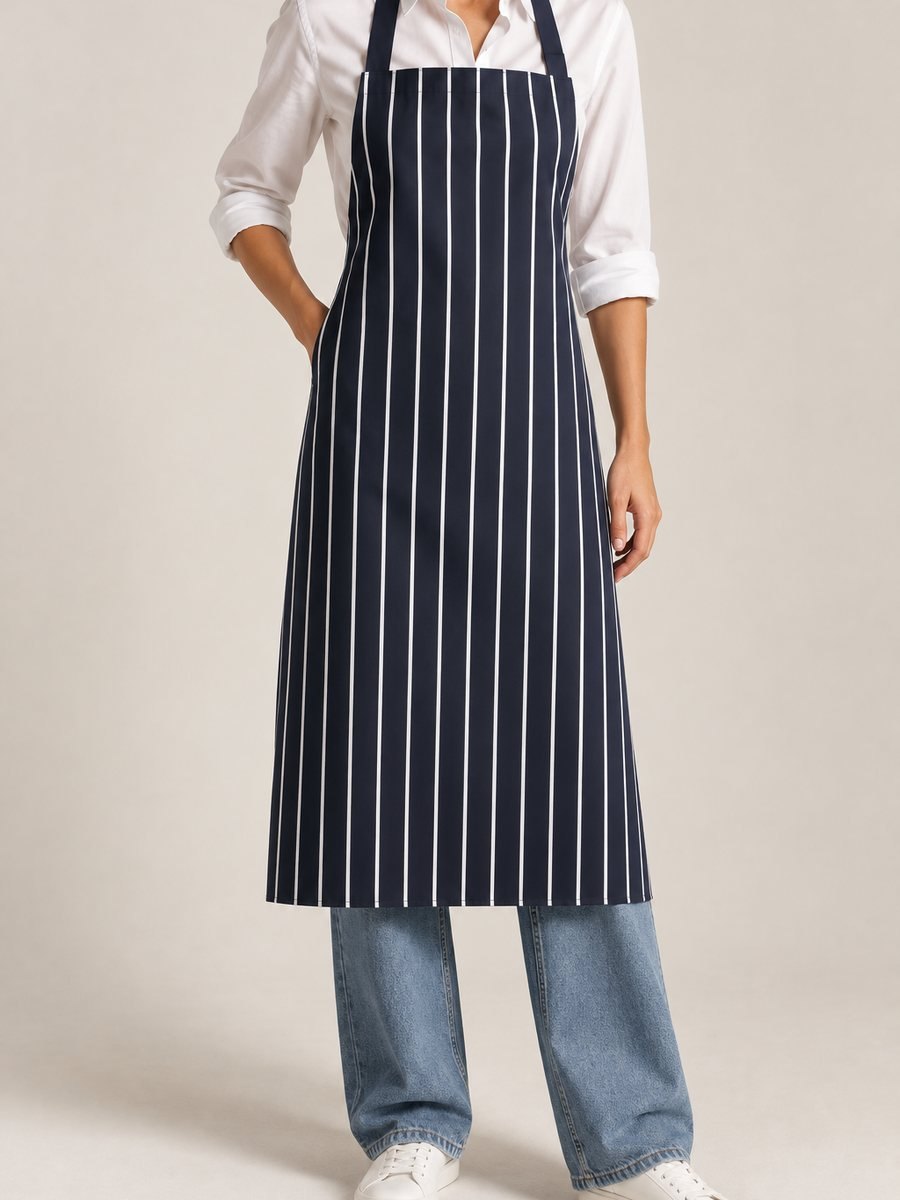
- Stability: a balanced yarn has little residual twist. Fabric woven from it is less prone to skewing (where the grain twists after washing), which matters when a bag panel or apron has to hang straight.
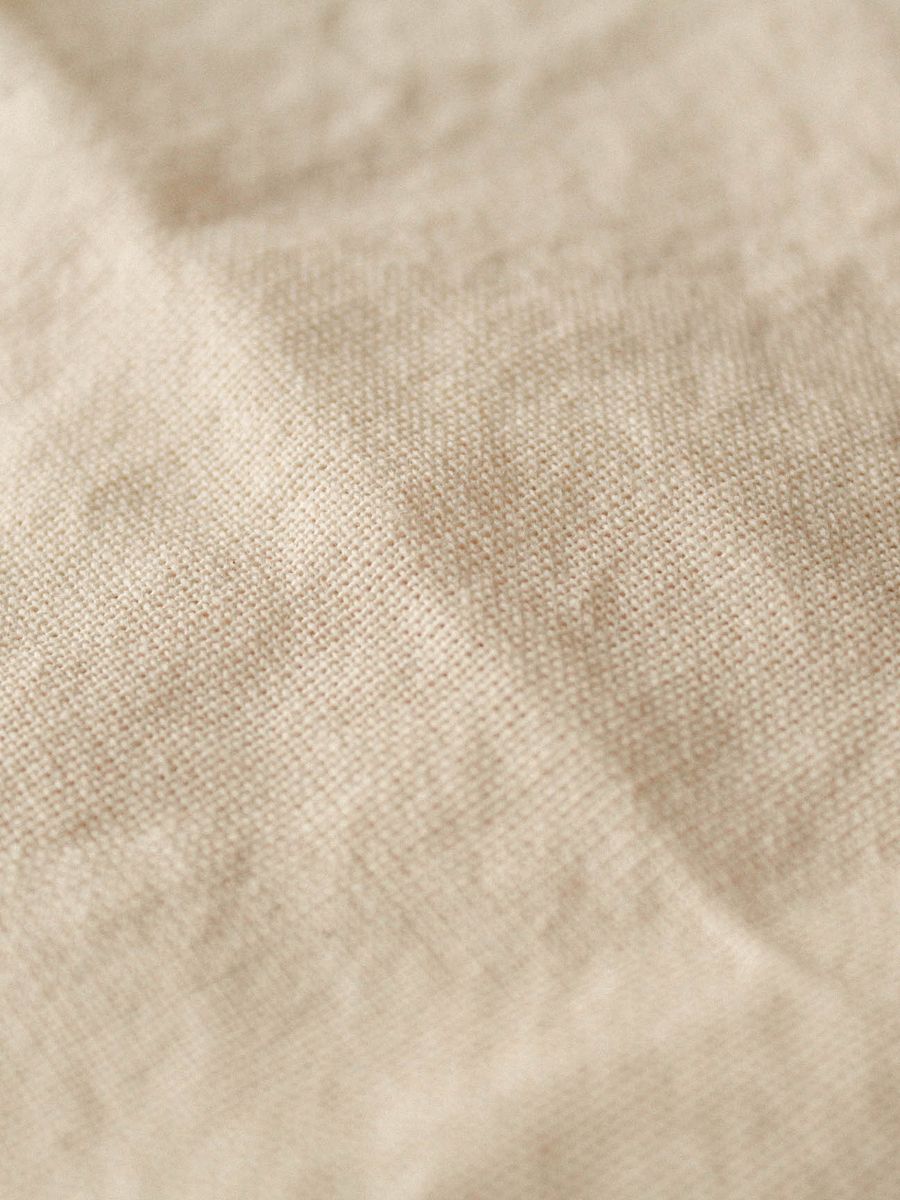
- Surface: plied yarns give a cleaner, more even face with a crisp, defined weave, which also prints and dyes more evenly.
Plied in both directions
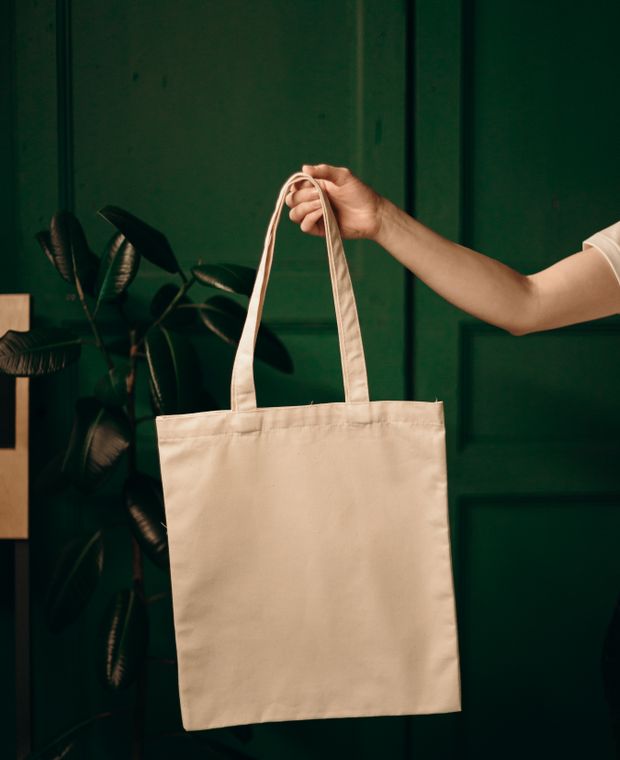
Many canvases use plied yarns in the warp only, because the warp takes the tension of weaving, and cheaper singles in the weft. That saves cost, but the cloth ends up stronger one way than the other. When a canvas is woven from double-ply yarns in both warp and weft, the strength is balanced in both directions. For a tote bag, where the load pulls down from the handles and outwards across the body, that balance is exactly what you want.
Single vs double ply at 500 gsm
| Single-ply canvas | Double-ply canvas | |
|---|---|---|
| Tensile and tear strength | Good | Higher, and more consistent along the roll |
| Abrasion and pilling | More surface fibre, wears faster | Compact yarn, wears more slowly |
| Hand and body | Softer, can feel papery | Firm, holds its shape, stands up unlined |
| Grain after washing | More likely to skew | More stable |
| Print and dye surface | Slightly hairier | Clean and even |
| Cost | Lower | Higher, because plying is an extra process |
How to check a canvas
The spec sheet should state the yarn counts for warp and weft. If it gives only a weight, ask. You can also check by eye: pull a yarn from the edge of a swatch, untwist it gently, and see whether it separates into two strands. For performance, the usual laboratory tests are tensile strength by the strip method (ISO 13934-1) and tear strength (the ISO 13937 series), with abrasion by the Martindale method (ISO 12947). Asking for results on both warp and weft shows whether the cloth is balanced.
Our canvas
Our Cotton Canvas 500 gsm is woven entirely from double-ply yarns in warp and weft, and is kept in 30 stock colours for fast sampling. It is used for tote bags, aprons, footwear, upholstery and other heavy-duty products. If you are comparing it with another canvas, ask us for a swatch and put the two side by side.