Cotton drill: the workhorse for aprons, tea towels and workwear
Drill is a plain-looking cloth with a lot of work in it. Here is what it is, how it relates to twill, and where a 255 gsm drill earns its place.
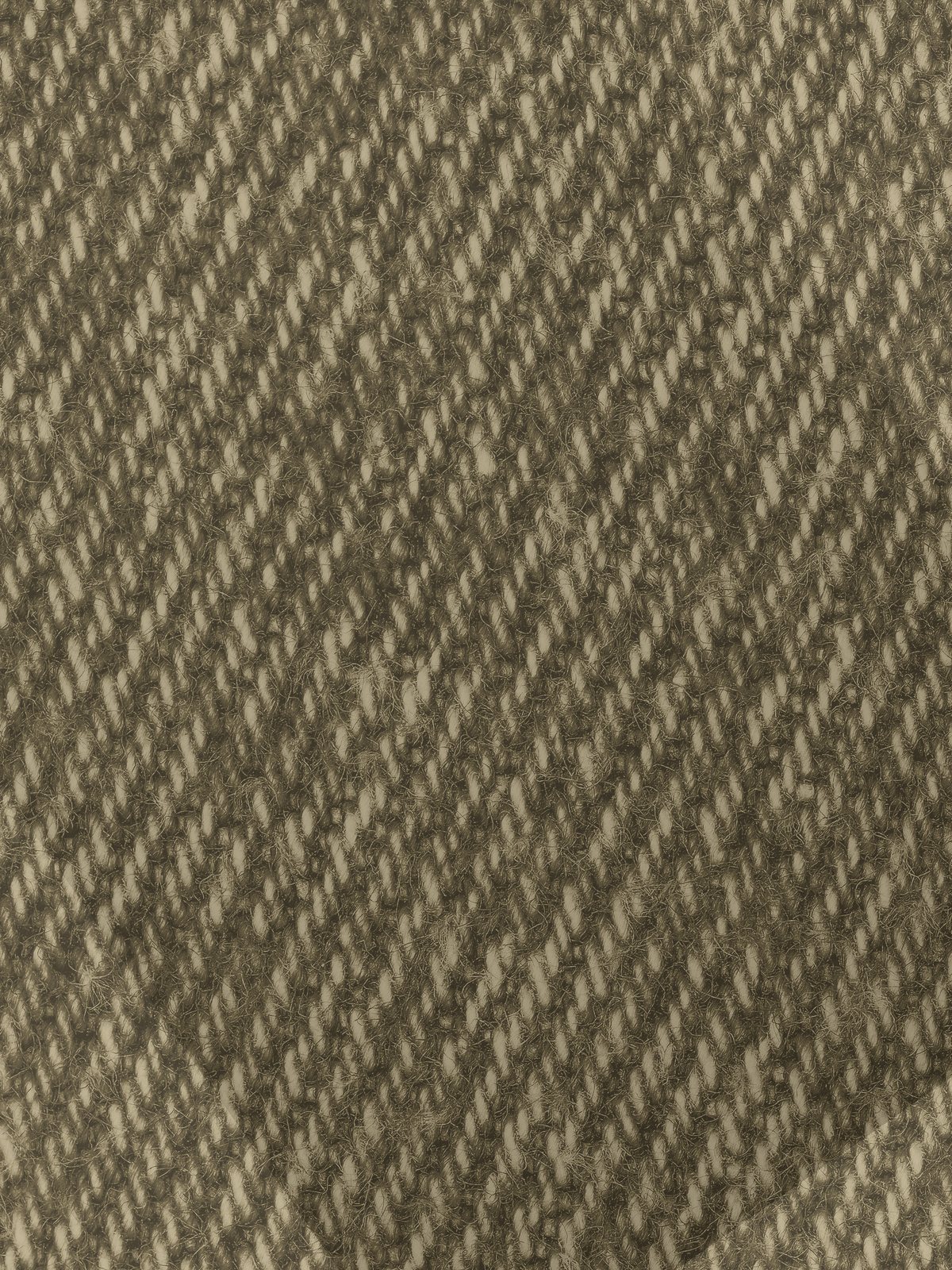
Drill is one of those fabrics people rely on without knowing its name. It is in chef's aprons, café uniforms, work trousers and hard-wearing tea towels: a firm, smooth cotton that takes a beating and still looks tidy. Here is what makes it different from other cottons.
Drill and twill: a family and a member
Twill is a weave family, not a fabric. In a twill weave, each weft thread passes over and under groups of warp threads in a pattern that steps along by one thread on each row. That step creates the diagonal line, or wale, you can see on the face of the cloth. Denim, gabardine, chino cloth and drill are all twills.
Drill is a strong cotton fabric woven in a twill, usually a 2/1 or 3/1 construction in which the warp floats over two or three weft threads before going under one. That makes it warp-faced: most of what you see on the front is warp yarn. Compared with other twills, drill is typically medium to heavy, made from firm cotton yarns and finished for a smooth, clean face rather than a soft brushed one.
Why drill is so dependable
- Strength. Twill packs more threads into each centimetre than a plain weave of the same yarn, because the floats let threads sit closer together. More yarn means a stronger, more tear-resistant cloth.
- Abrasion resistance. The dense, warp-faced surface stands up to rubbing against counters, tables and tools.
- Drape with body. Twill is more pliable than a plain weave of similar weight, so drill hangs well while still holding its shape.
- Soil hides better. The diagonal texture breaks up the surface, so small marks are less visible than on a flat plain weave.
- Print and dye. The smooth face takes a solid shade evenly and gives a crisp ground for a print or a logo.
Why 255 gsm
Our Cotton Drill is woven at 255 gsm (about 7.5 oz/yd²). At that weight it sits in a useful middle ground:
| Use | What 255 gsm drill gives |
|---|---|
| Aprons | Holds a pocket and ties without sagging; comfortable to wear all day |
| Tea towels | More body and a smoother hand than panama; wears very well |
| Workwear and uniforms | Hard-wearing but not stiff; presses cleanly |
| Bags and accessories | Firm enough for light bags, pouches and covers |
Lighter drills feel more like a shirting and lose the structure that makes an apron sit well. Much heavier cloths, such as canvas, become stiff and warm to wear for long shifts. 255 gsm is heavy enough to work and light enough to wear.
What to check on a drill
- Shrinkage after washing, especially for fitted aprons and workwear, where a few percent changes the fit.
- Colour fastness to washing and rubbing, to ISO 105-C06 and ISO 105-X12. Dark shades on workwear rub against other surfaces all day.
- Tear strength, particularly at pocket corners and strap attachments.
- Handle after washing, since drill softens with use and some finishes wash out.
Piece-dyed or printed
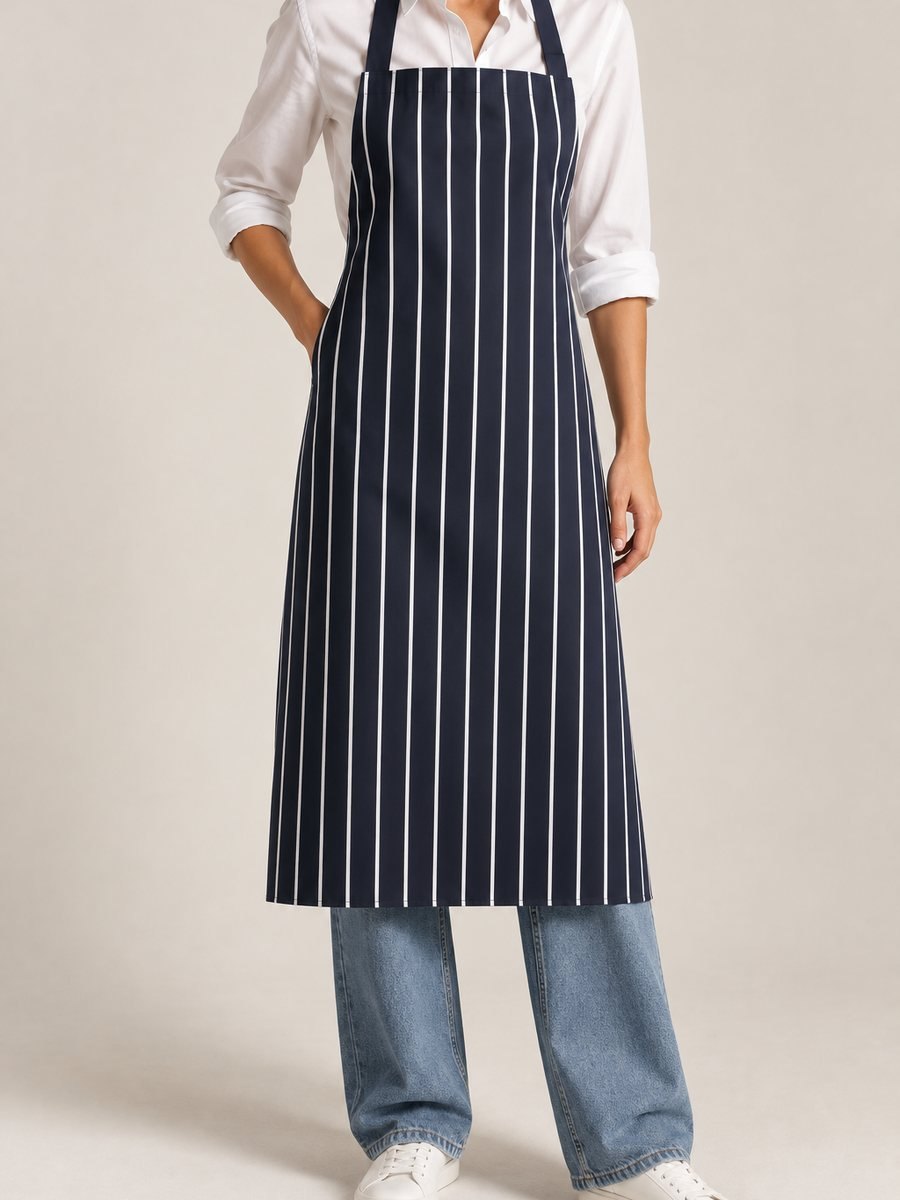
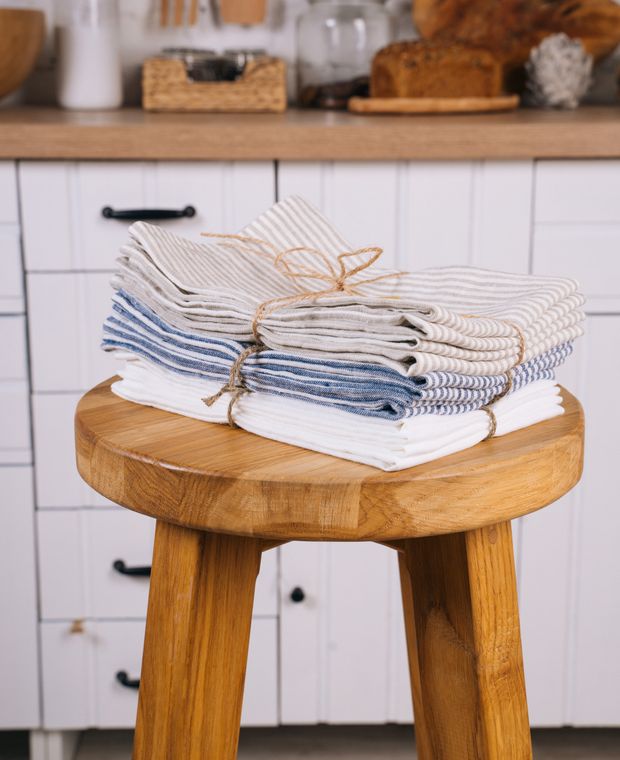
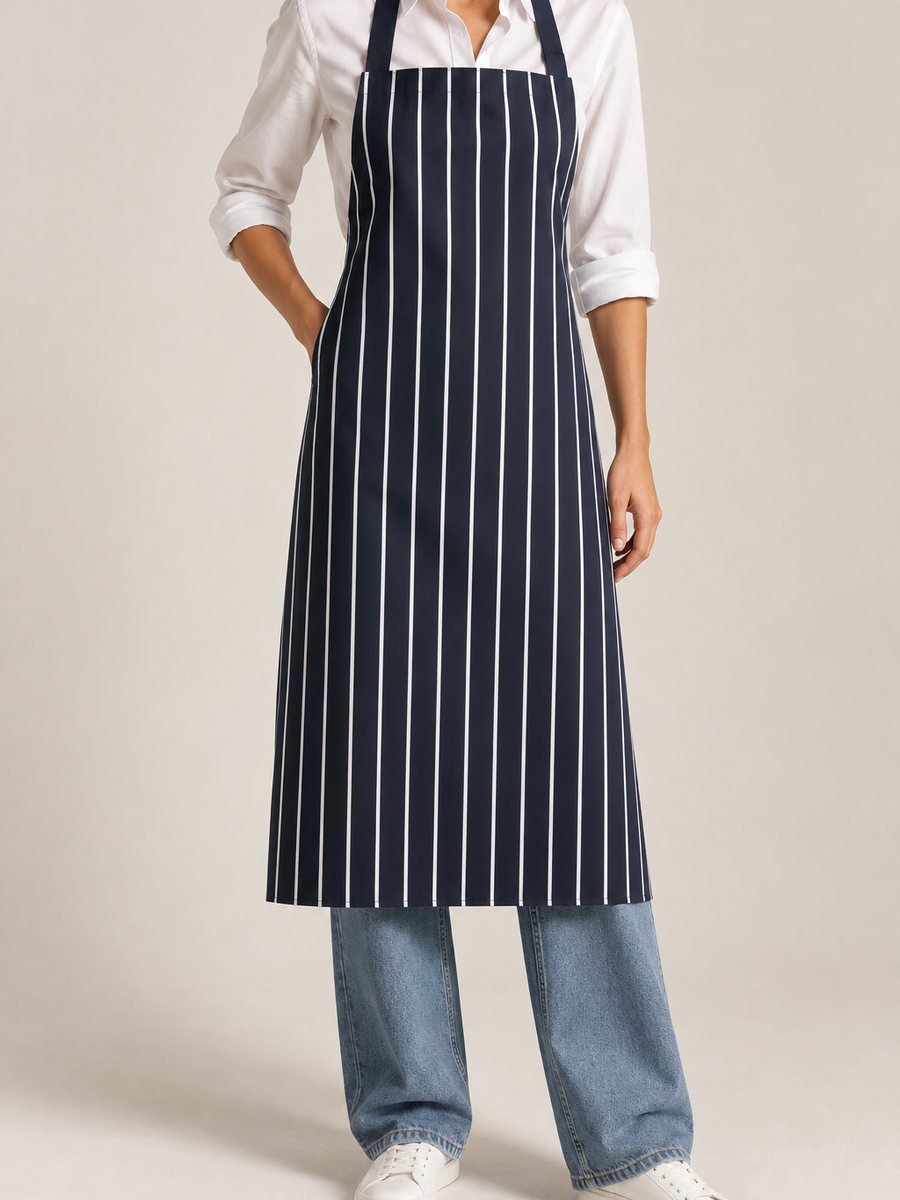
Drill is supplied piece-dyed to your shade or digitally printed with your pattern. Our classic striped bib apron is made in the same 255 gsm drill, and the cloth is also one of our three tea towel qualities. See the apron fabric and tea towel fabric pages, or tell us what you are making and we will send a sample.